Sub-Total: $0.00
About the Journey
Trace the evolution of this sacred symbol-from its earliest forms to its enduring presence.
Cross Symbol History Through Time
I dedicate this site to exploring the fascinating cross symbol history that spans centuries of Christian tradition. Christianity transformed under Emperor Constantine in 324 AD, ending Roman persecution and establishing the cross as a fundamental symbol. My collection at Ancient Christian Crosses celebrates this remarkable evolution from simple crucifixion imagery to the sophisticated eight-ended Golgotha cross that emerged in the sixth century.
Sacred Foundations of Ancient Cross Symbolism
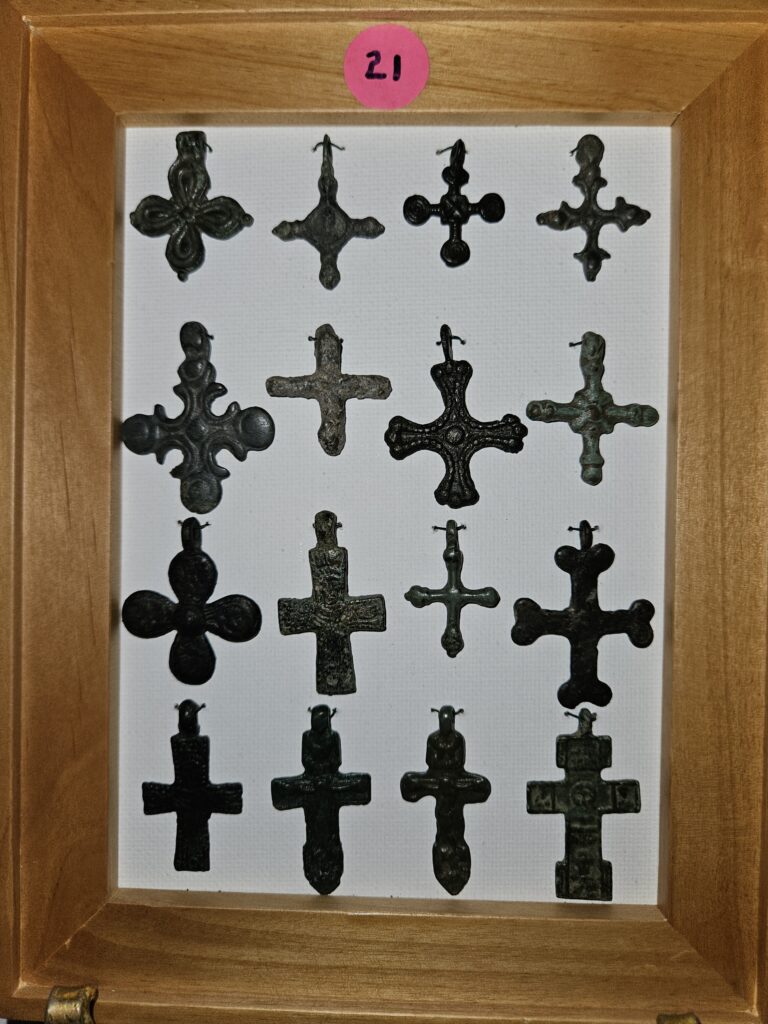
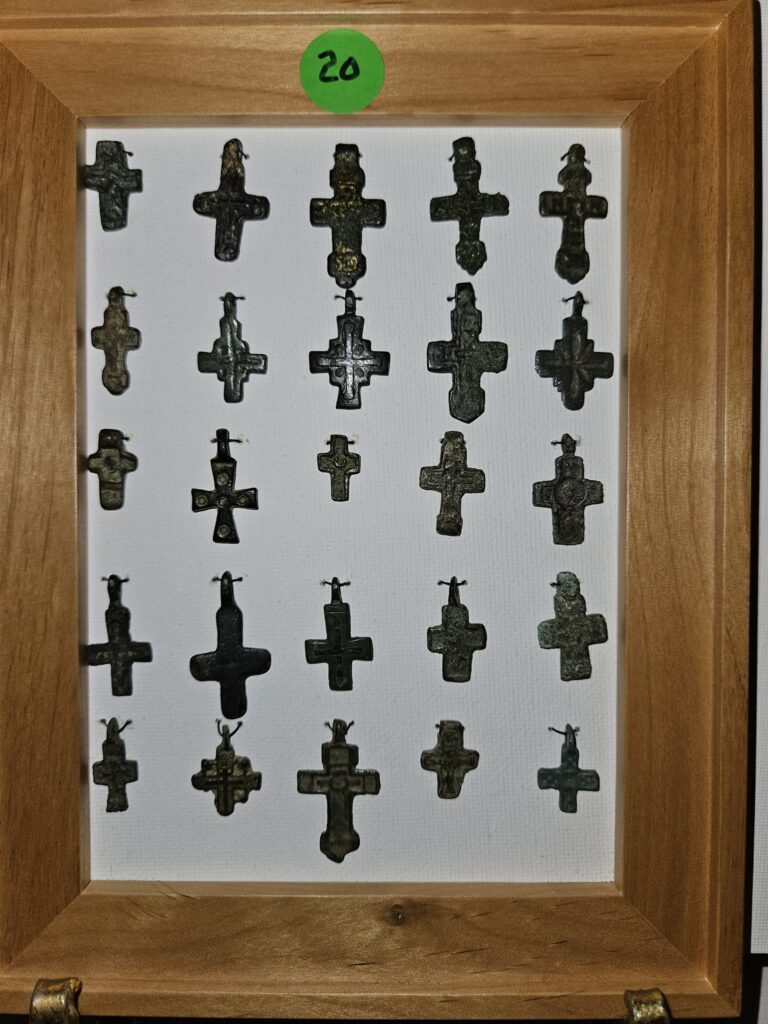
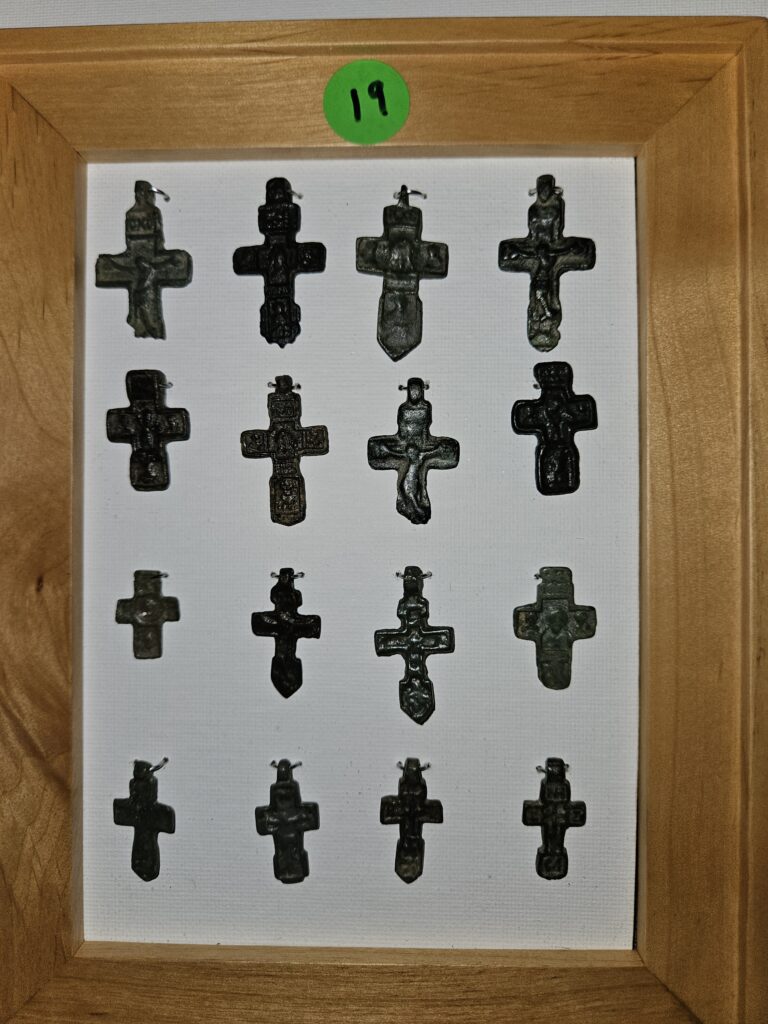
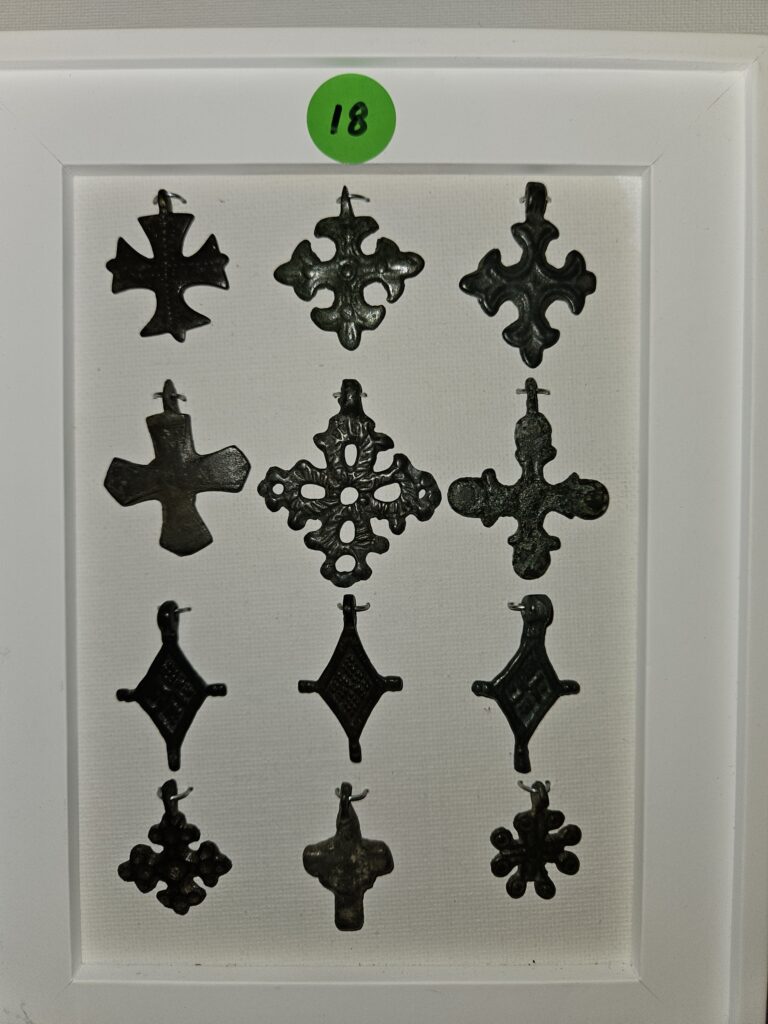
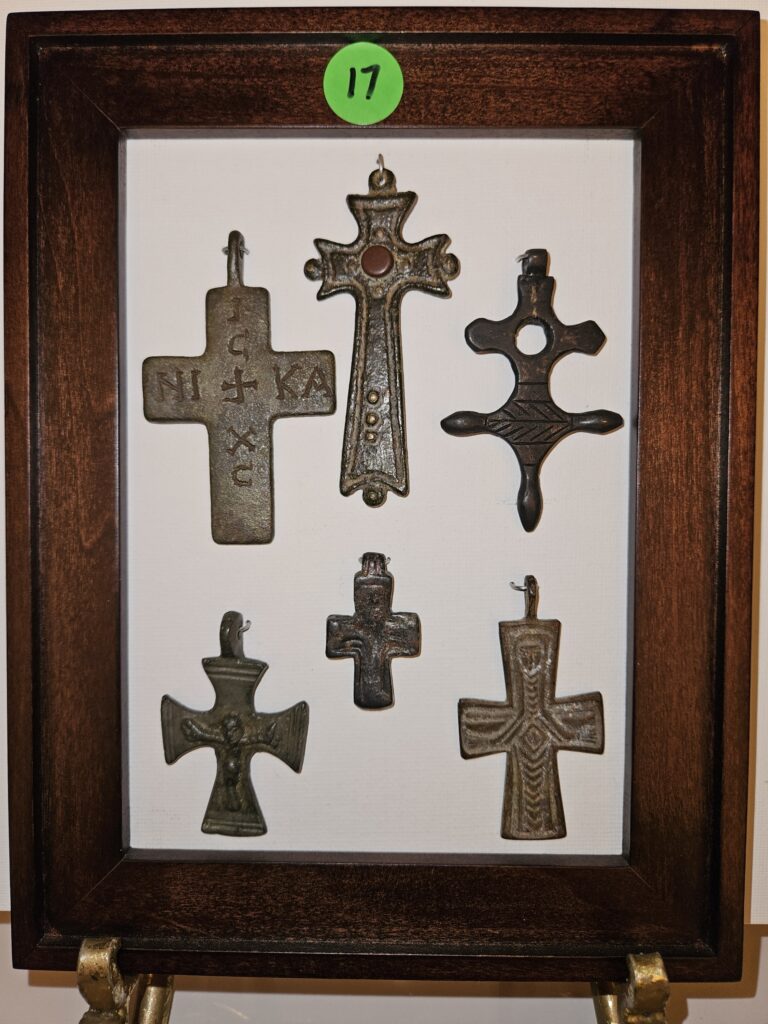
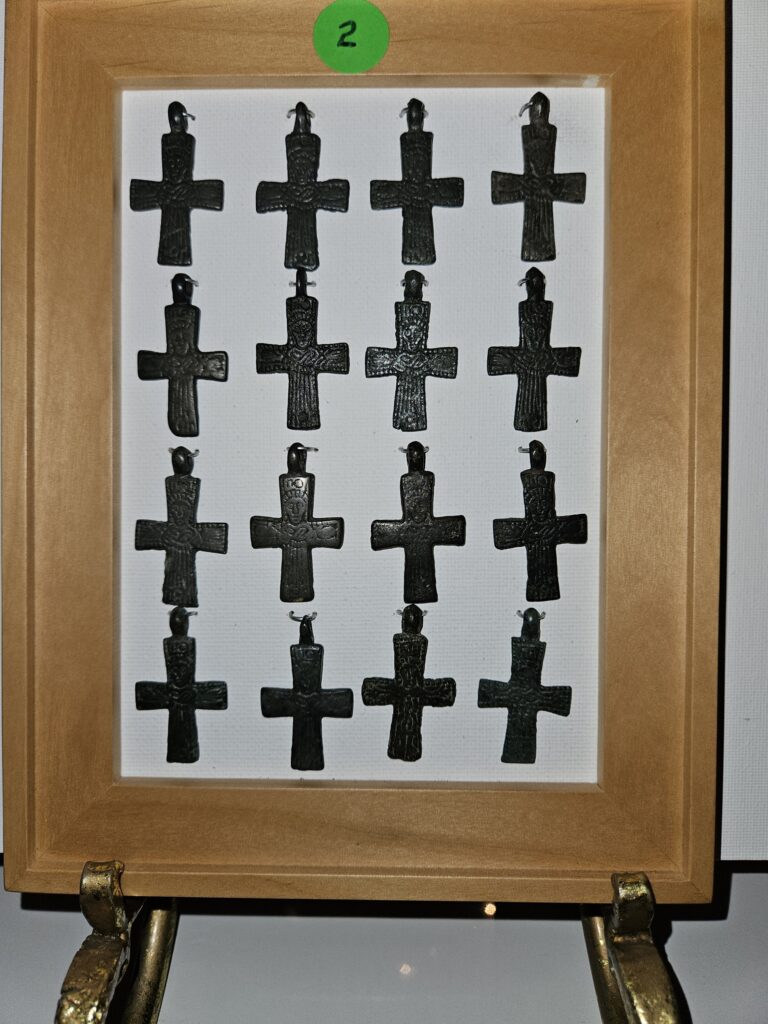
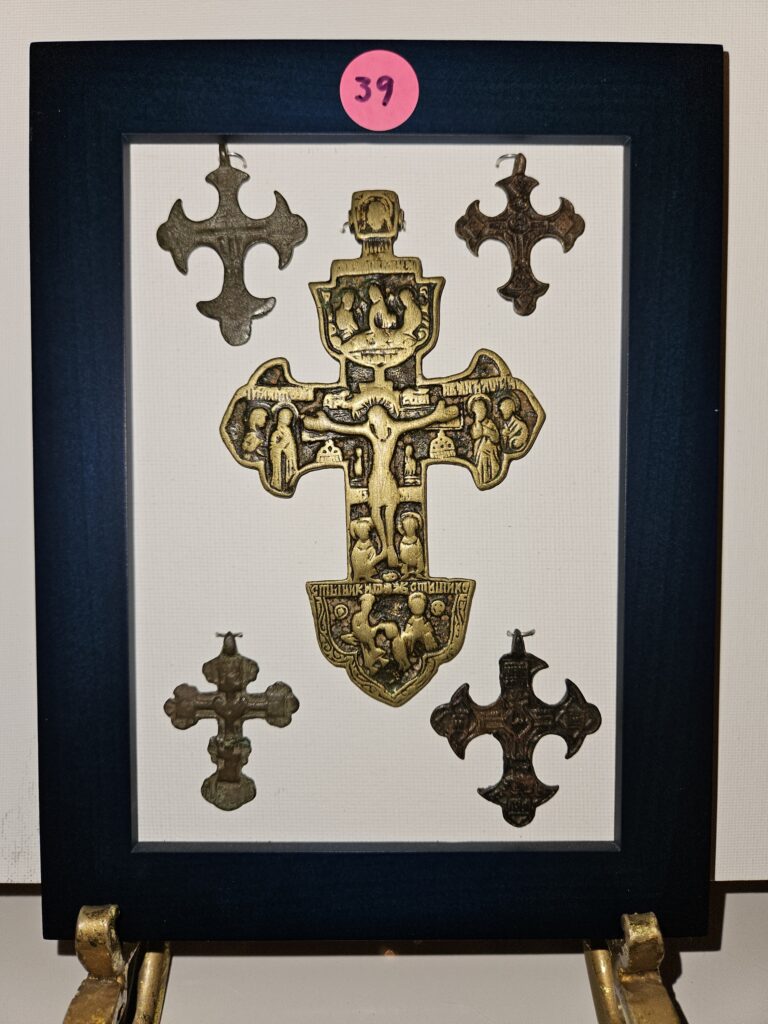
Ancient cross symbolism influenced Christian worship. The eight-ended Golgotha cross, with its footrest and headboard, appeared in the sixth century and was embraced by the Russian Orthodox Church in the ninth. I collect pectoral crosses—small bronze castings from monastery foundries, known for their simplicity. Traditionally given at baptism, they were worn underclothing for life and replaced if lost, representing a continuous spiritual connection.
An Explanation of the Russian Orthodox Three-Bar Cross
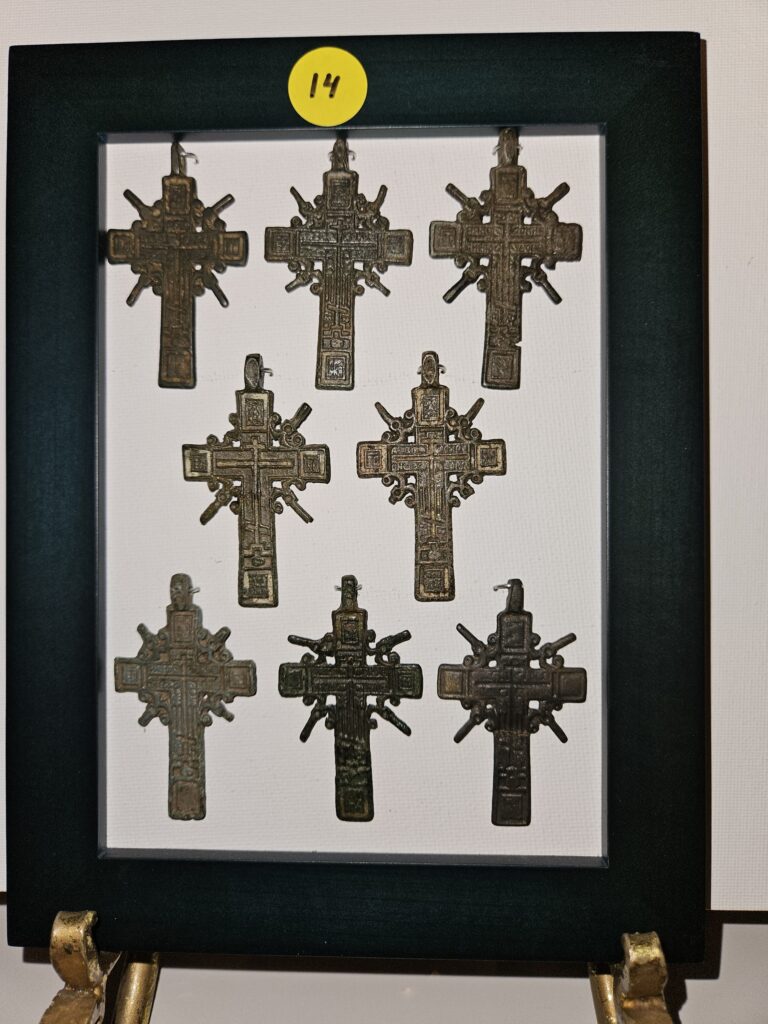
Through the Cross came our salvation. We are constantly reminded that Christ died for us and that He rose from the dead. The image of the crucified Lord reminds us of this. This page allows you to navigate through an explanation of the Orthodox Cross. Each step shows a close-up of that part of the cross, as well as its explanation and any words on it. The main source for this is a document written by Fr. Theodore Jurewicz.
The Top Bar
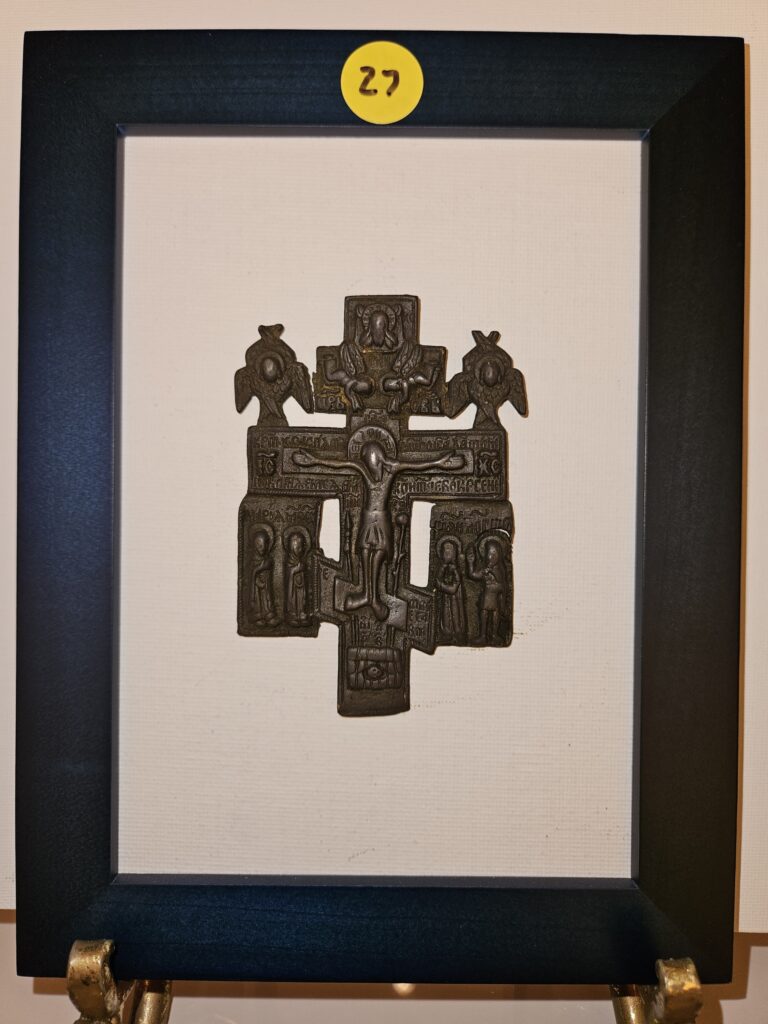
The Explanation: The top bar is the title board, which Pilate ordered to be hung in mockery over Christ’s head on the Cross. On this board was inscribed "Jesus of Nazareth, King of the Jews" in Hebrew, Greek, and Latin (abbreviated to the Greek initials ‘INBI’ or the Latin initials ‘INRI’ in the Western tradition). This is replaced with the Christian inscription "King of Glory"—below the knees of the angels. On the title board are inscribed the initials 'IC XC,' being the first and last letters of Christ’s name in Greek. In addition, just above Christ's arms we see the inscription ‘NIKA,’ which in Greek means "He conquers" or "He is victorious." Frequently, we see these last two inscriptions together: 'IC XC NIKA,' meaning "Jesus Christ is victorious" (over death and sin).
The Middle Bar
The Explanation: The middle bar is that on which the Lord's hands were nailed. On either top corner we see the depiction of the sun (left) and the moon (right), for "The sun hid its light, and the moon turned to blood." (Joel 2:31) The inscription "Son of God" is placed on both sides of Christ's head, and below His arms we read the inscription "Before Thy Cross we bow down, O Master, and Thy holy Resurrection, we glorify". The halo of Christ is inscribed with three Greek letters meaning "The Being" or "He Who Is", to remind us that Christ is the same God Who identified Himself with those words to Moses in the Old Law.
The Bottom Bar
The Explanation: The slanted bottom bar is the footrest. There is some question of whether it was actually on the Cross of Christ, but it is acknowledged to be a necessary attribute of the Cross, worthy of veneration and prophetically alluded to in the words [Let us] worship the footstool of His feet... (Ps. 98:5). In prayers for the Ninth Hour, the Church likens the Cross to a type of balance of righteousness: "Between two thieves Thy Cross did prove to be a balance of righteousness: wherefore one of them was dragged down to Hades by the weight of his blasphemy, whereas the other was lightened of his transgressions unto the comprehension of theology. O Christ God, glory to Thee."
The meaning of this prayer is as follows: the Cross of Christ stood for a scale of justice between the two thieves; for one of them sank into hell, dragged down by his blasphemous words, and the other, the wise thief, ascended into heaven because of his repentance. The church fathers attempted to render tangible the thought of the unfaithful thief going to hell for his blasphemy through the just judgment of God (the lower end of the bar) and of the wise thief going to heaven for his repentance and his praise of God (the upper end).
Volume IV, No. 3; May-June 1982 Living Orthodoxy was also used as a source for some material on this page.
The Images
The Explanation: On the cross is our Savior, Jesus Christ. Note that He does not wear a crown of thorns and that His feet are nailed with two nails. Behind the body of Christ, on either side, are a lance (which pierced Him) and a sponge (which was soaked with gall and offered to Christ to drink) on a pole made of reed or cane. On the body of Christ is depicted blood and water flowing forth from His side. Below the feet of Christ are four Slavonic letters meaning, "The place of the skull became Paradise". Hidden in a cave under the earth is 'the skull of Adam.' We are thus reminded that Adam, our forefather, lost Paradise through the tree from which he wrongly partook; Christ is the new Adam, bringing us salvation and Paradise through the tree of the Cross. The city of Jerusalem is depicted in the background, for He was crucified outside the city walls.
Prayers to the Cross
The Troparia:
Before Thy Cross we bow down, O Master, and Thy Holy Resurrection we glorify.
O Lord, save Thy people and bless Thine inheritance. Grant Thou unto Orthodox Christians victories over adversaries, and by Thy Cross preserve Thy people.
The Kontakion:
O Thou Who wast lifted willingly on the Cross, bestow Thy mercies now upon Thy nation, which beareth Thy name, O Christ God. Gladden Orthodox Christians with Thy power Orthodox Christians, granting them victories over adversaries, as they have Thine assistance, a weapon of peace, and the invincible trophy.
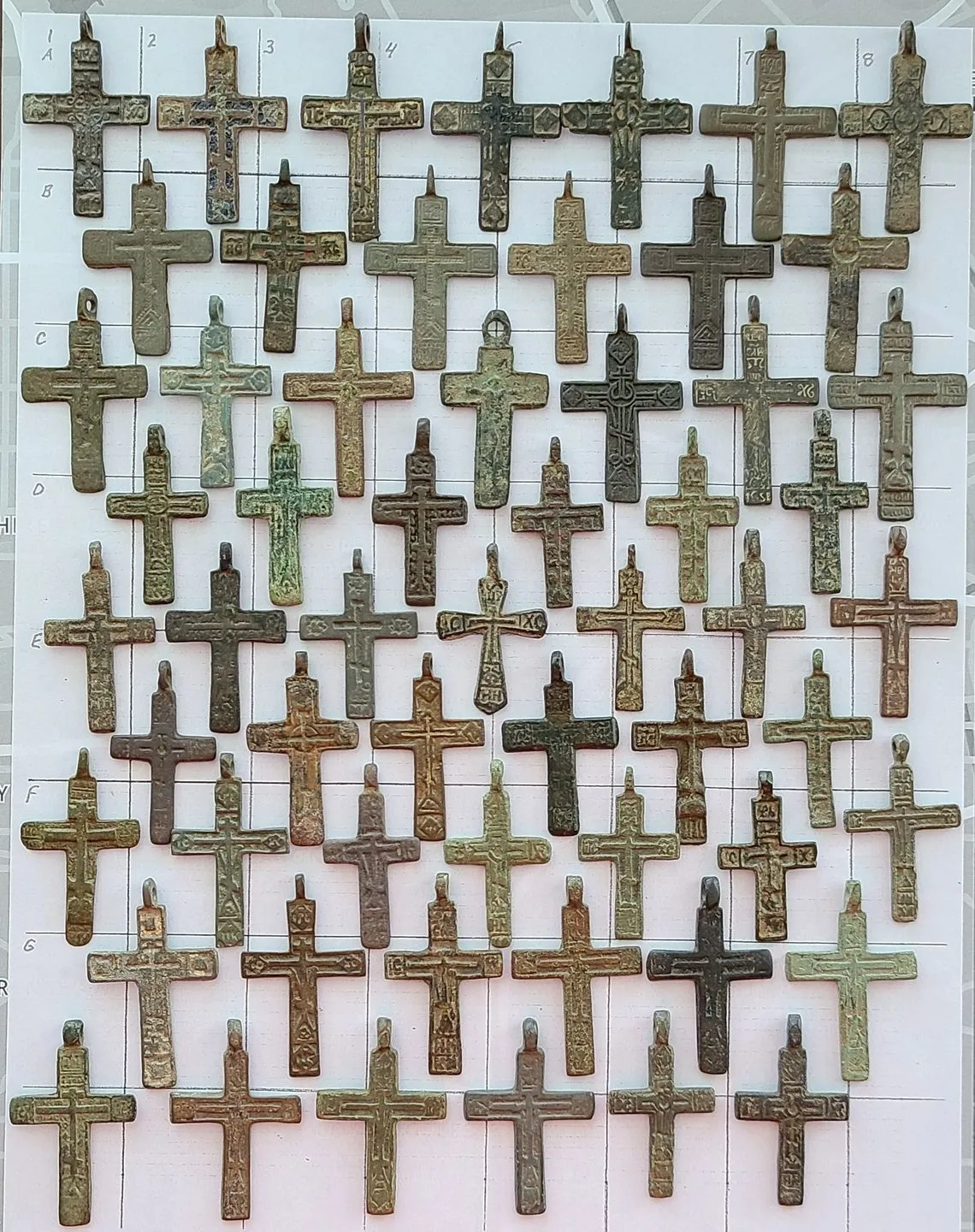
Bronze Cross
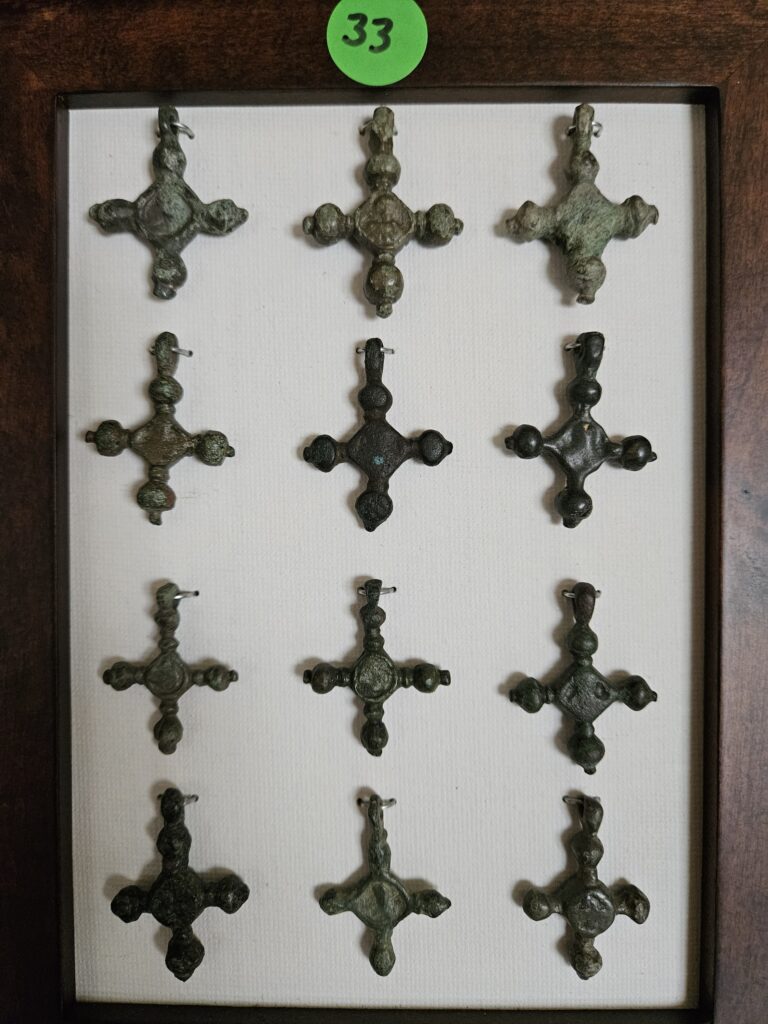
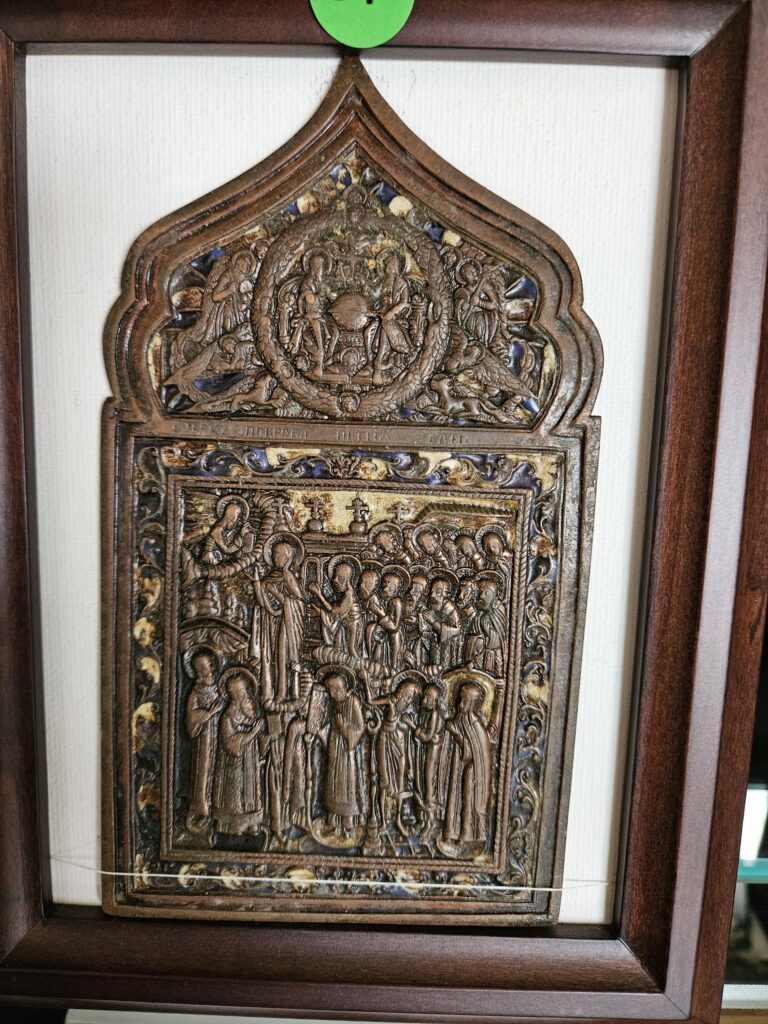
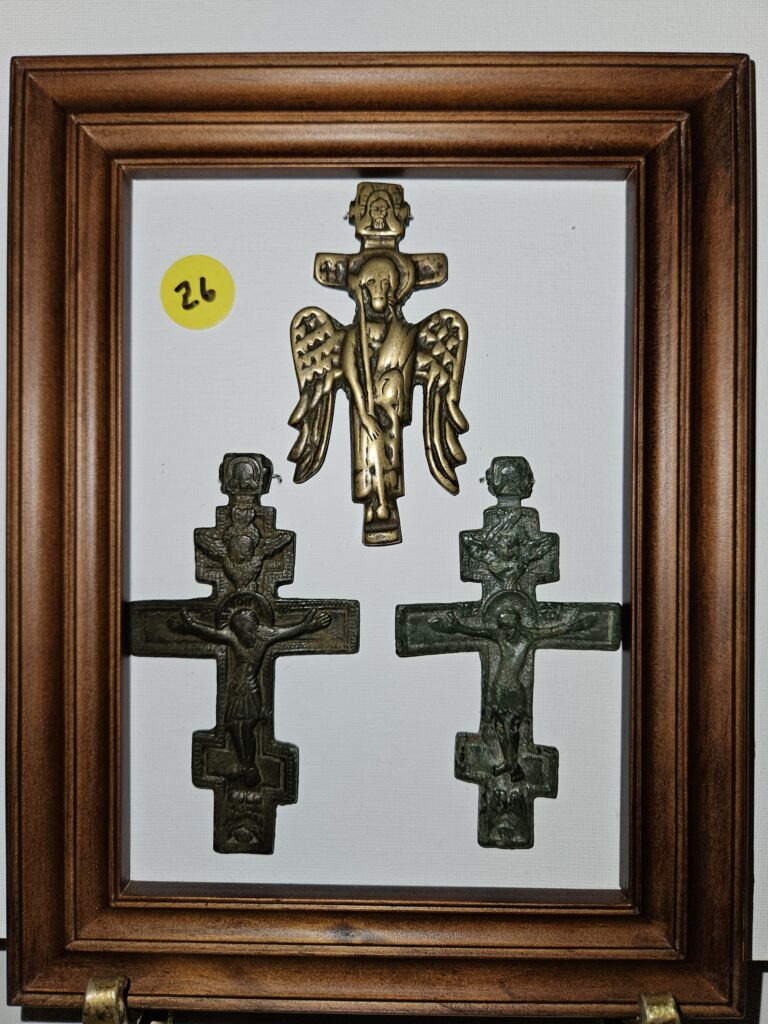
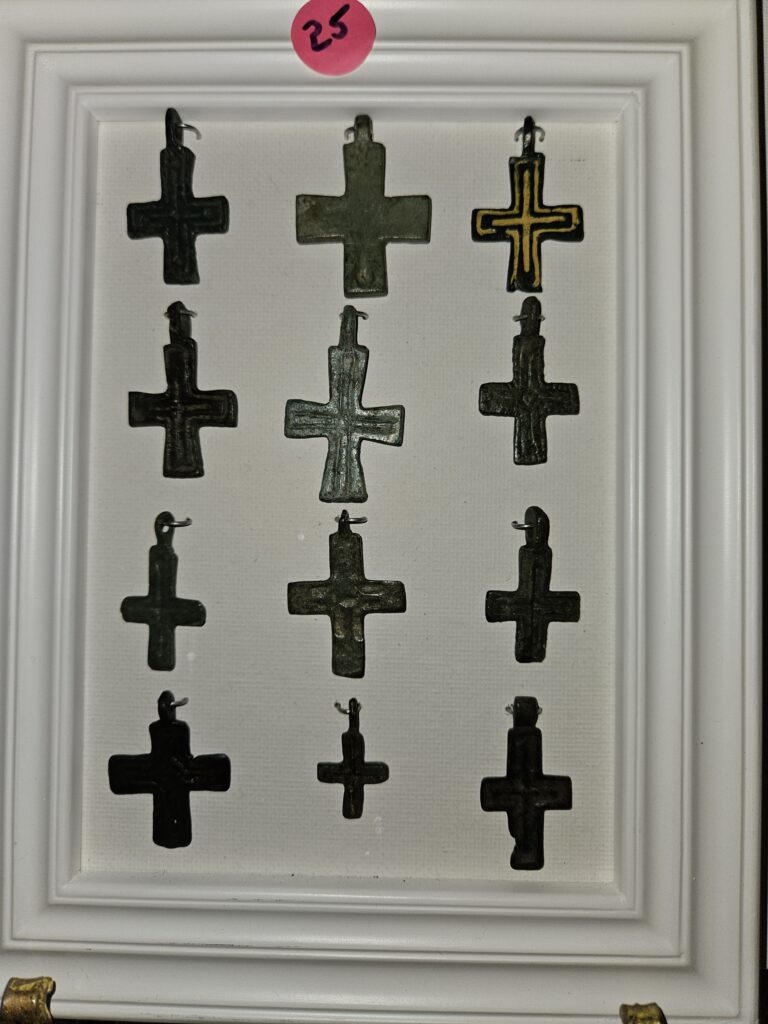
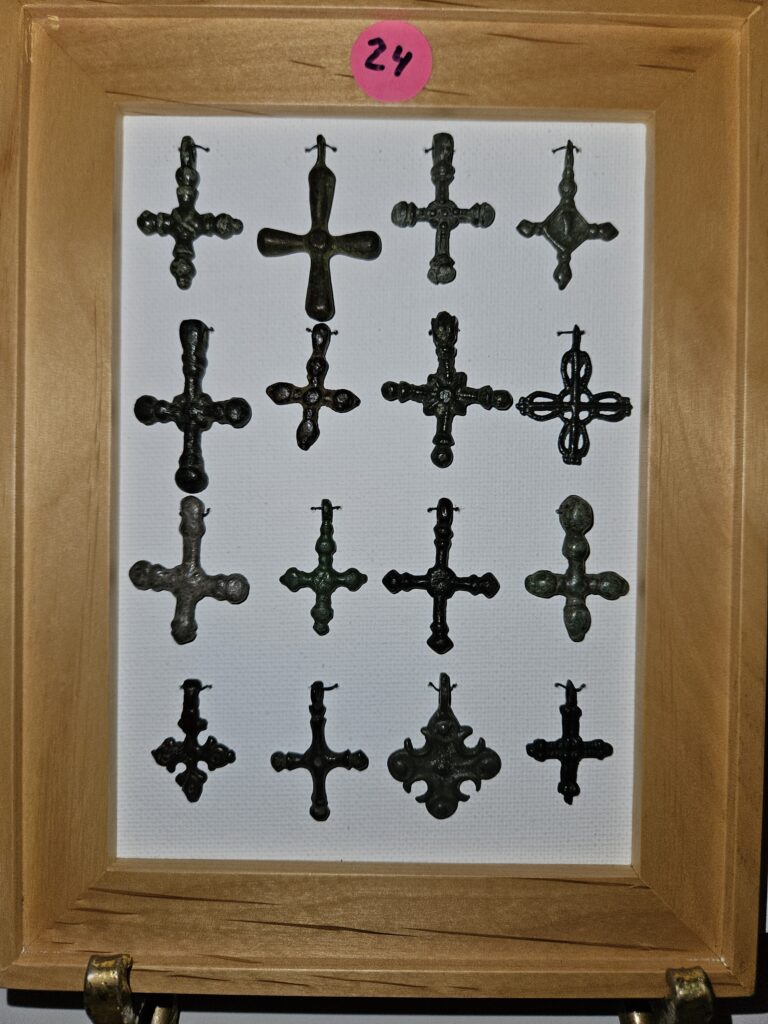
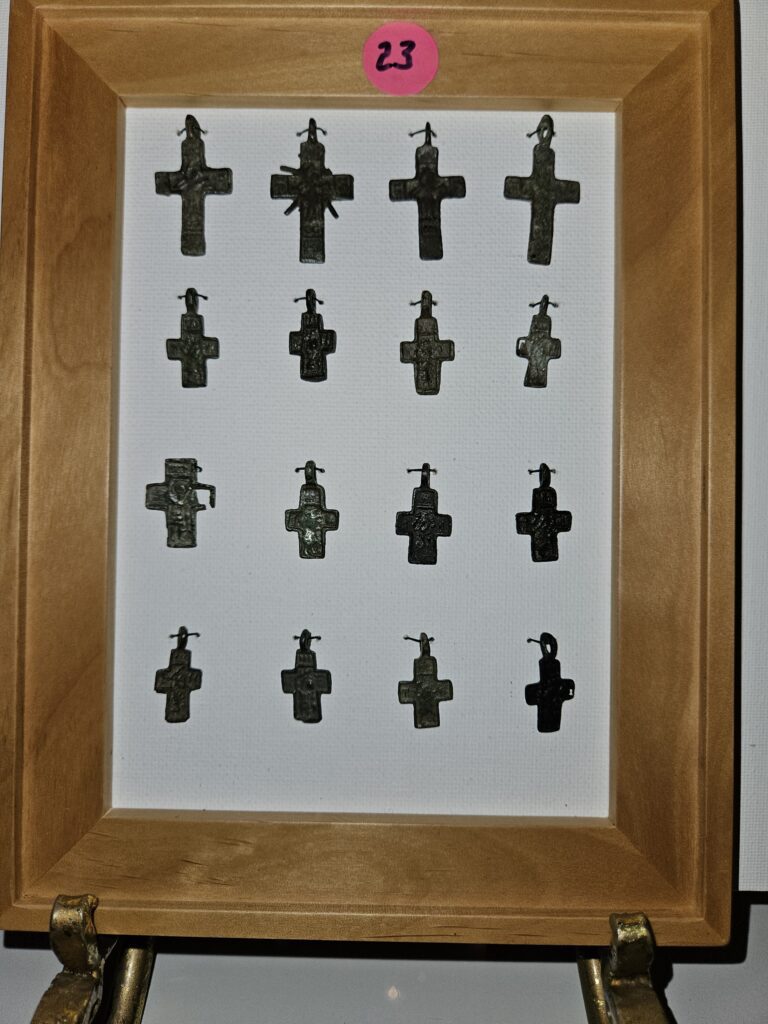
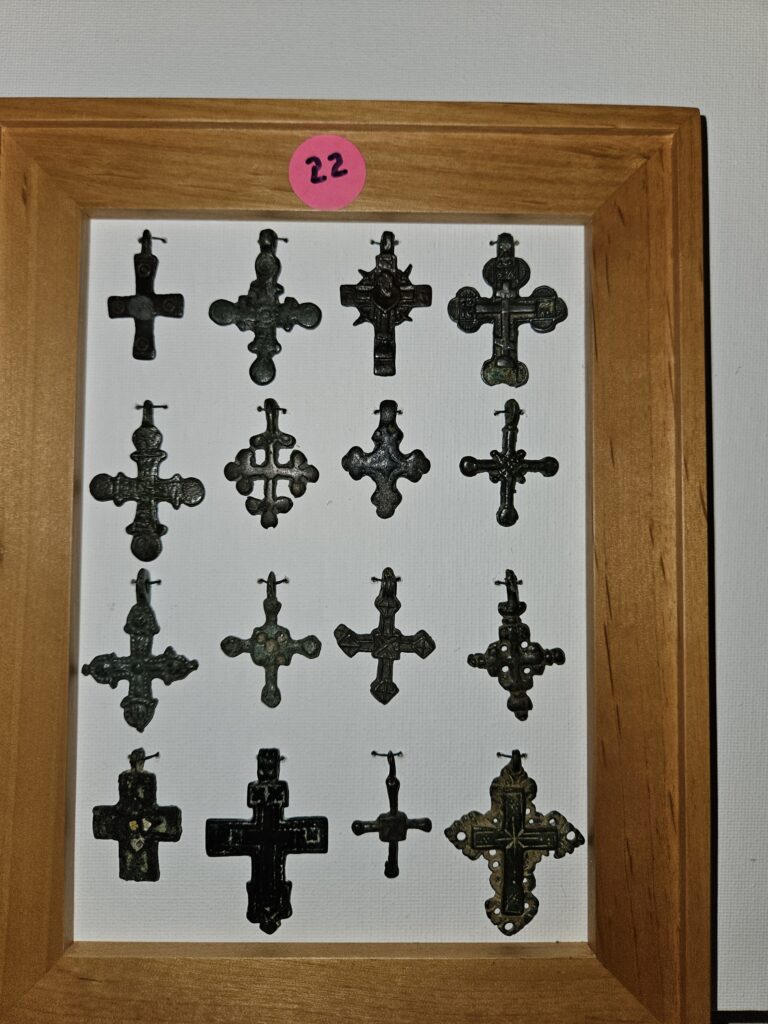
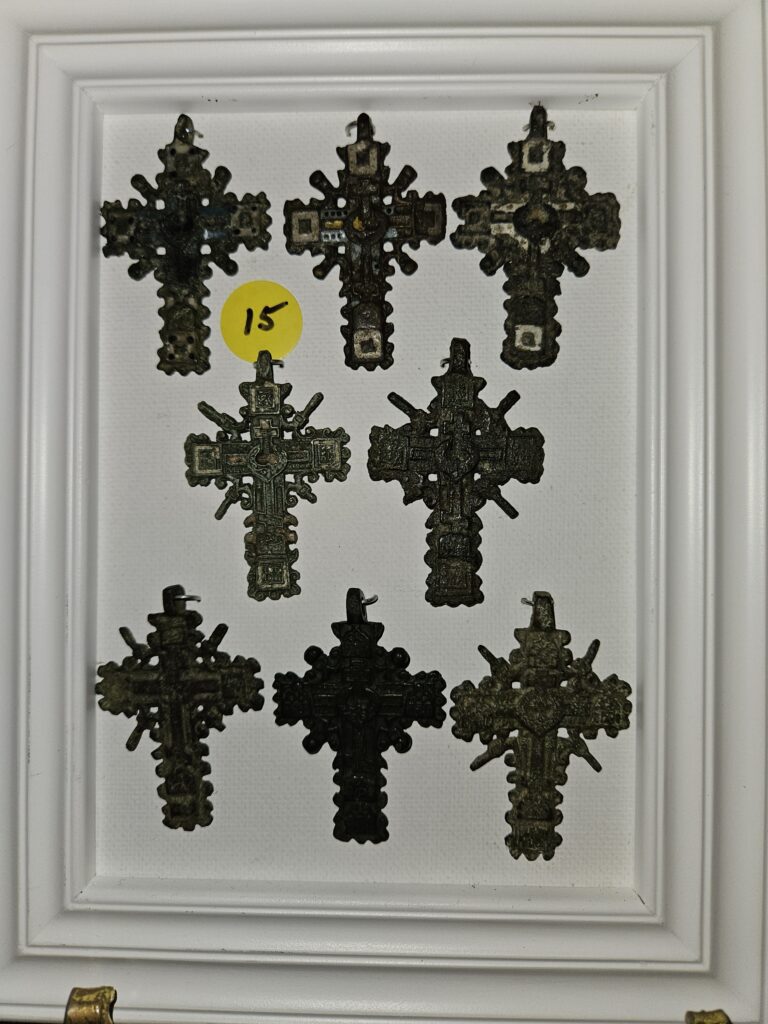
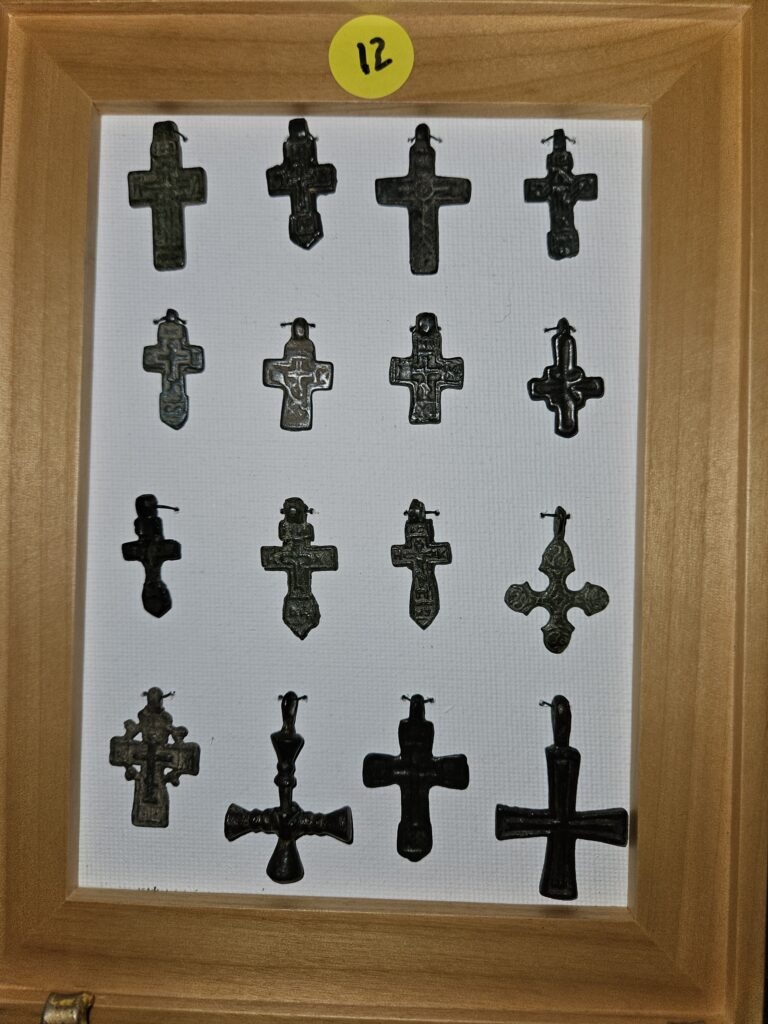
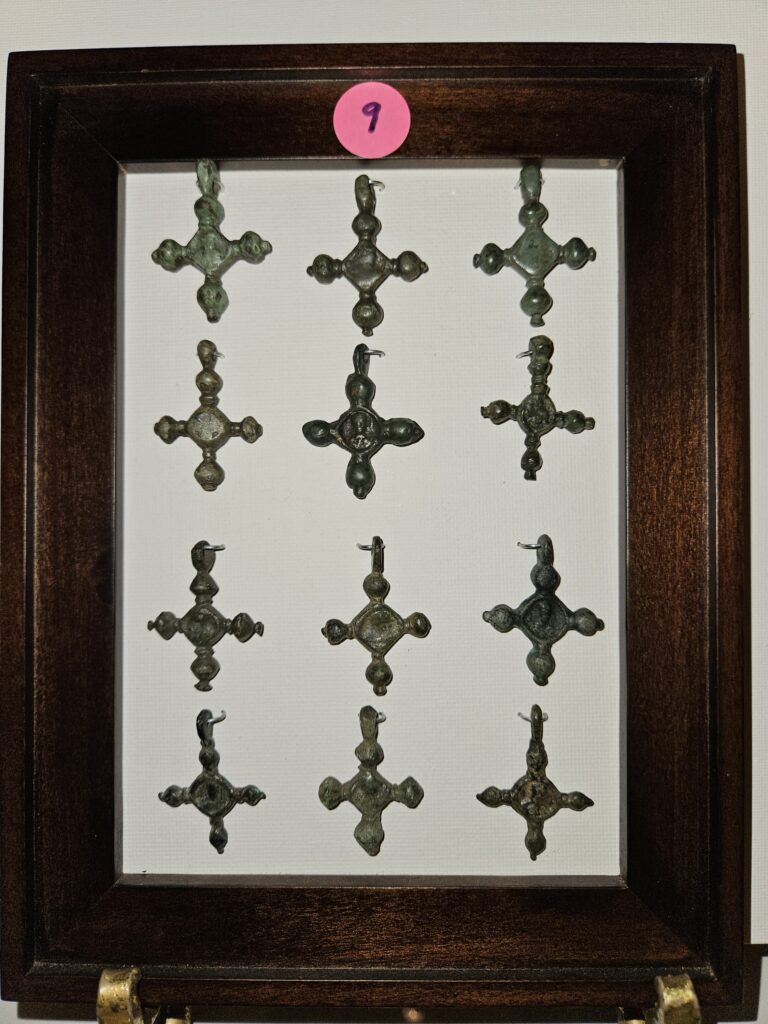
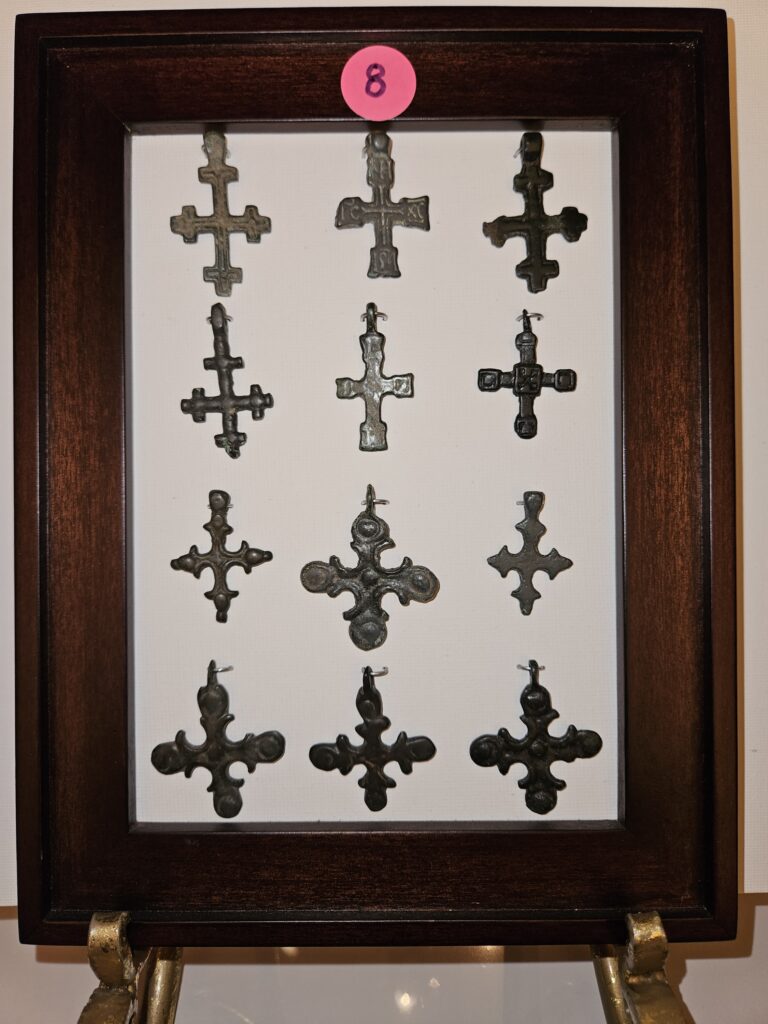
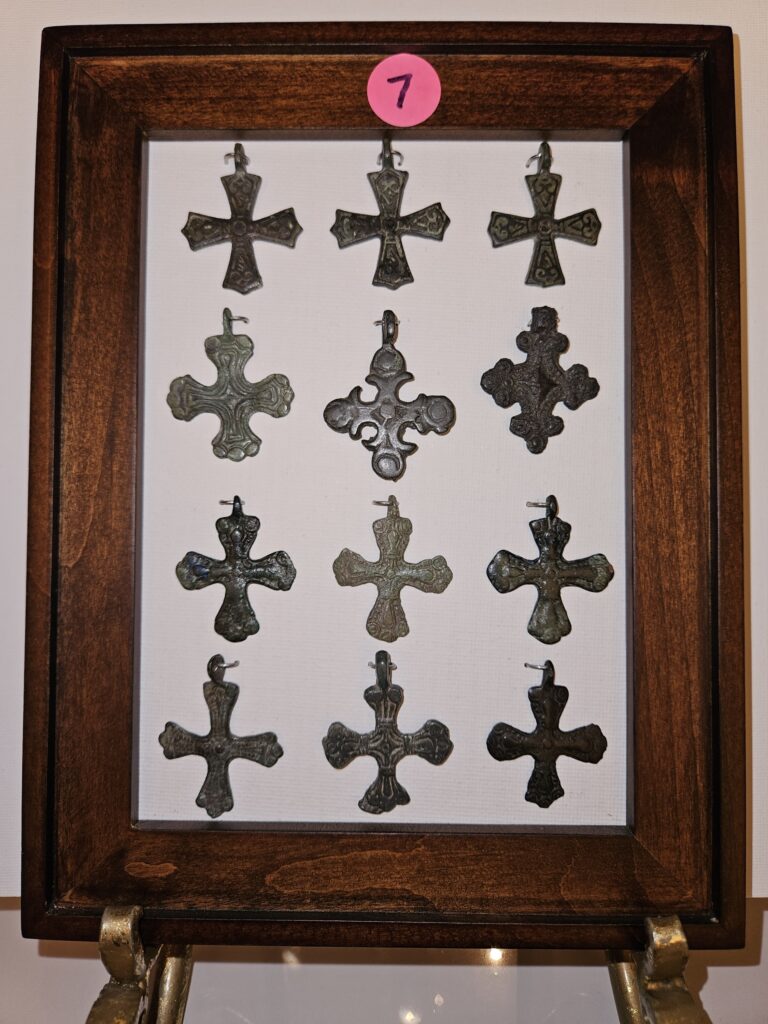
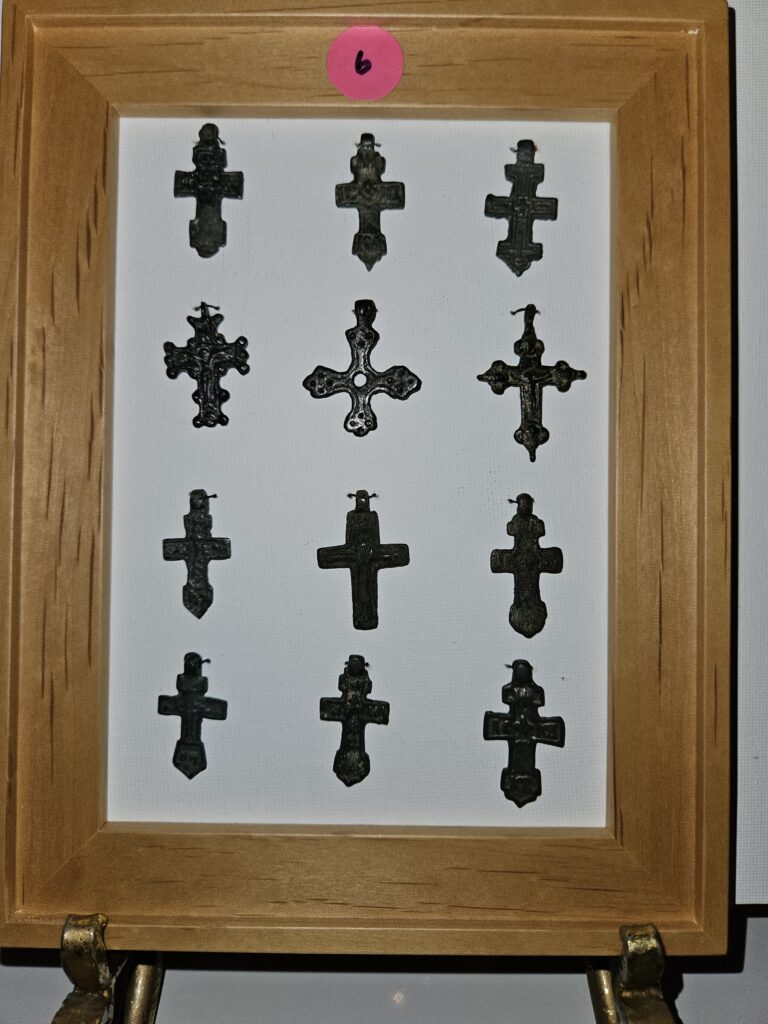
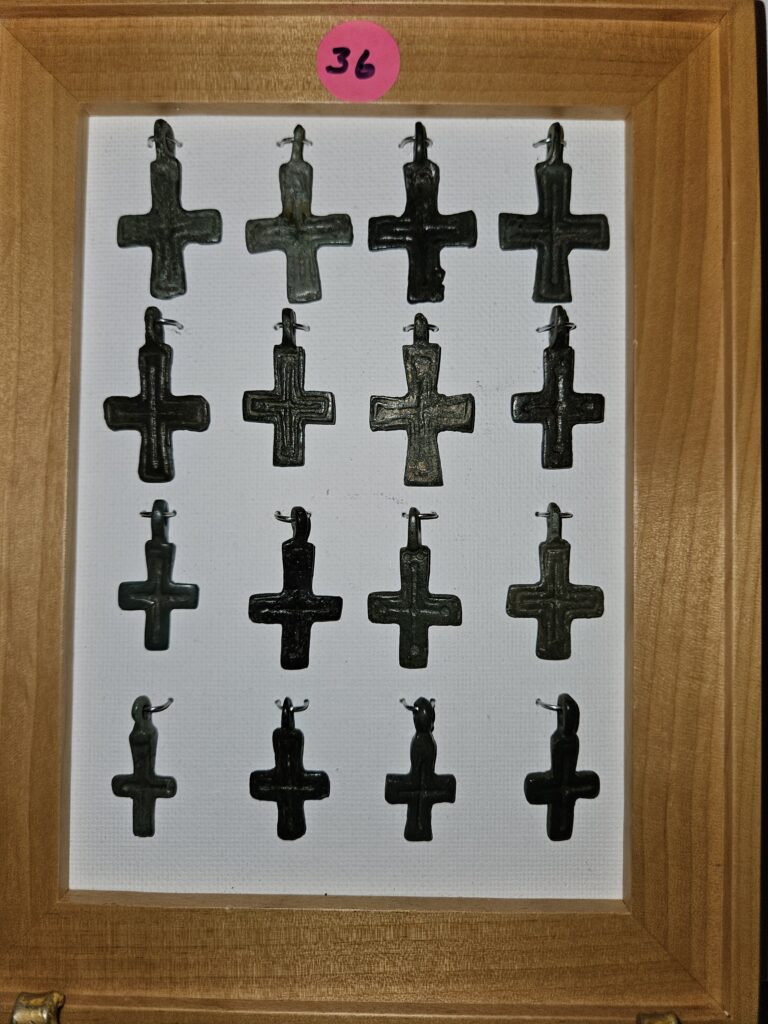
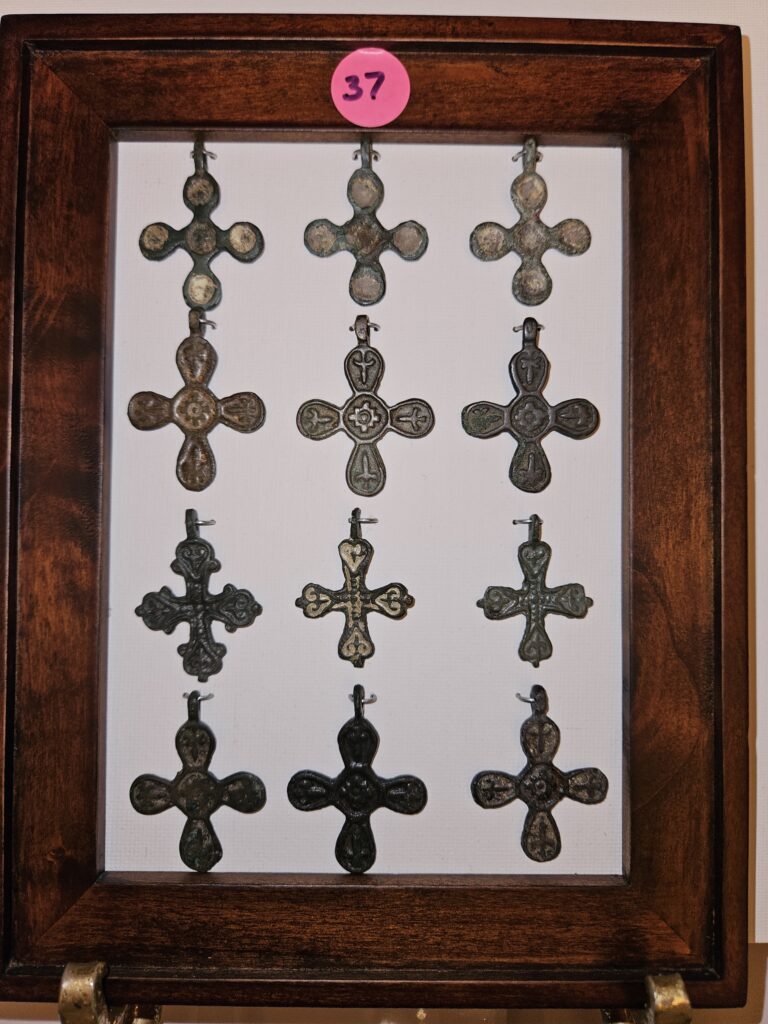
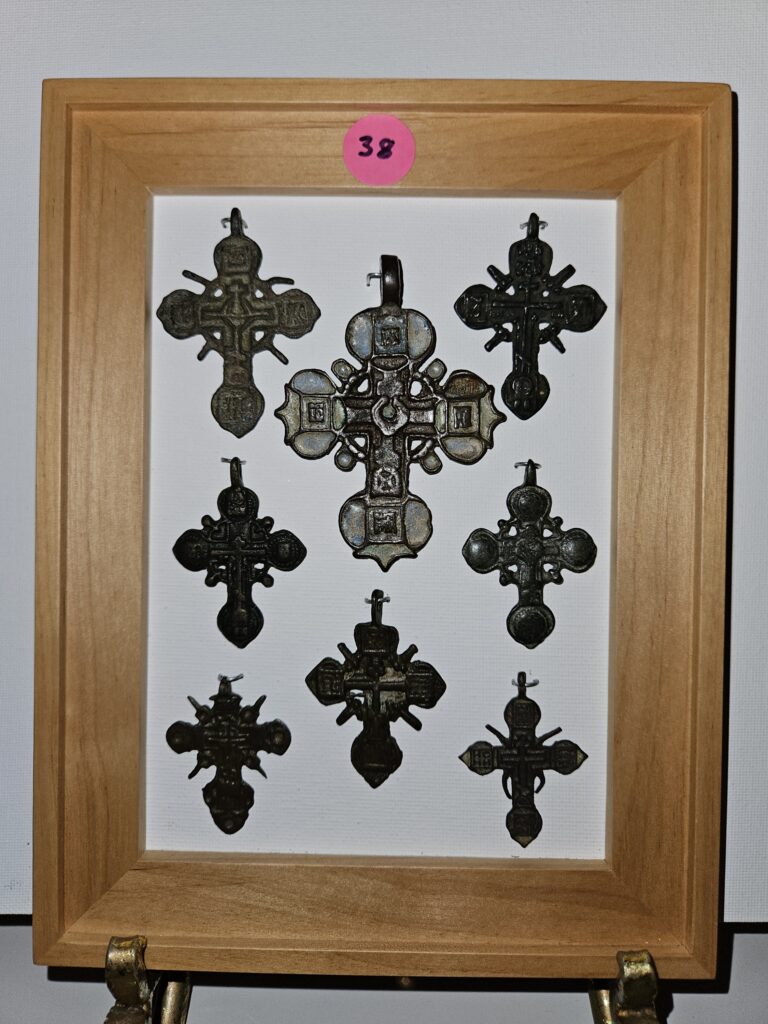
The cross is one of the basic symbols of Christianity. Christianity became a recognized religion under Emperor Constantine in 324 AD, which halted the persecution of Christians by the Romans. The images of the cross on which Christ was crucified were known to us since that time. The eight ended Golgotha cross which includes the foot rest and the head board, started to show up in the VI century. It was adopted by the Russian Orthodox Church in the 9th century.
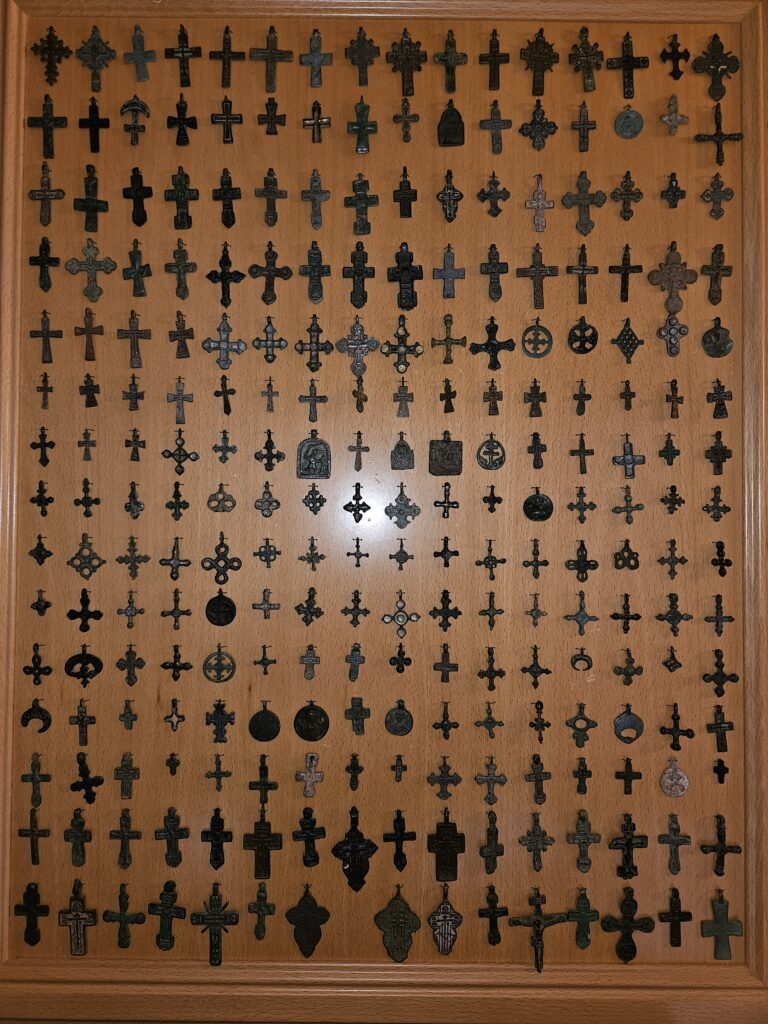
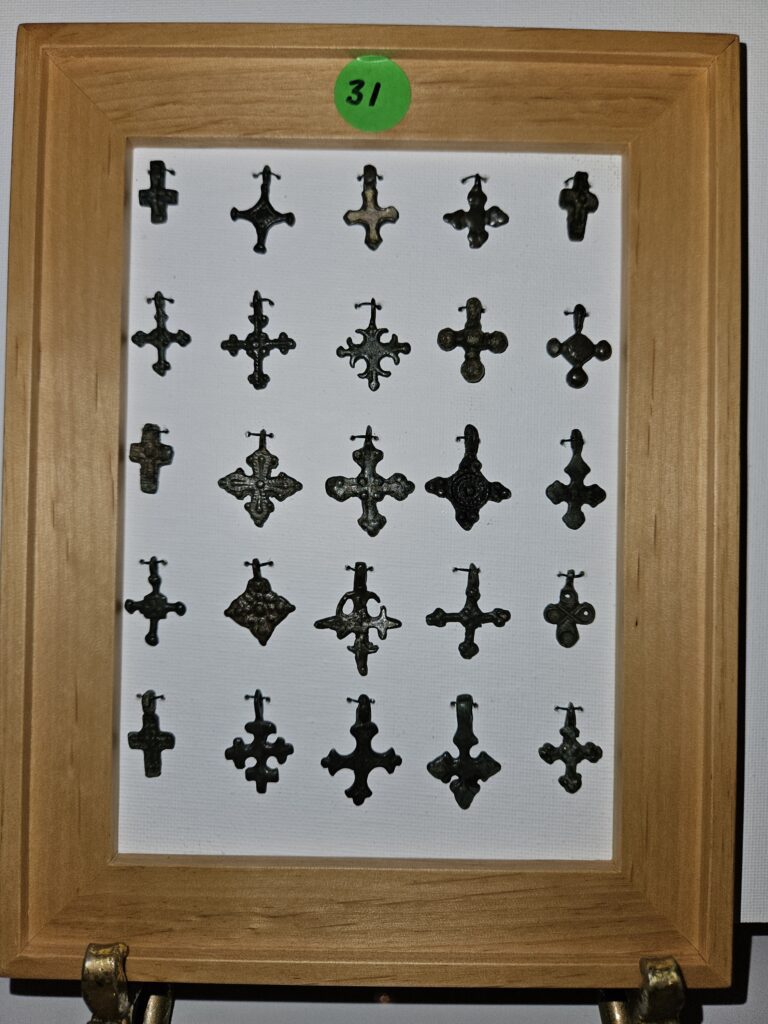
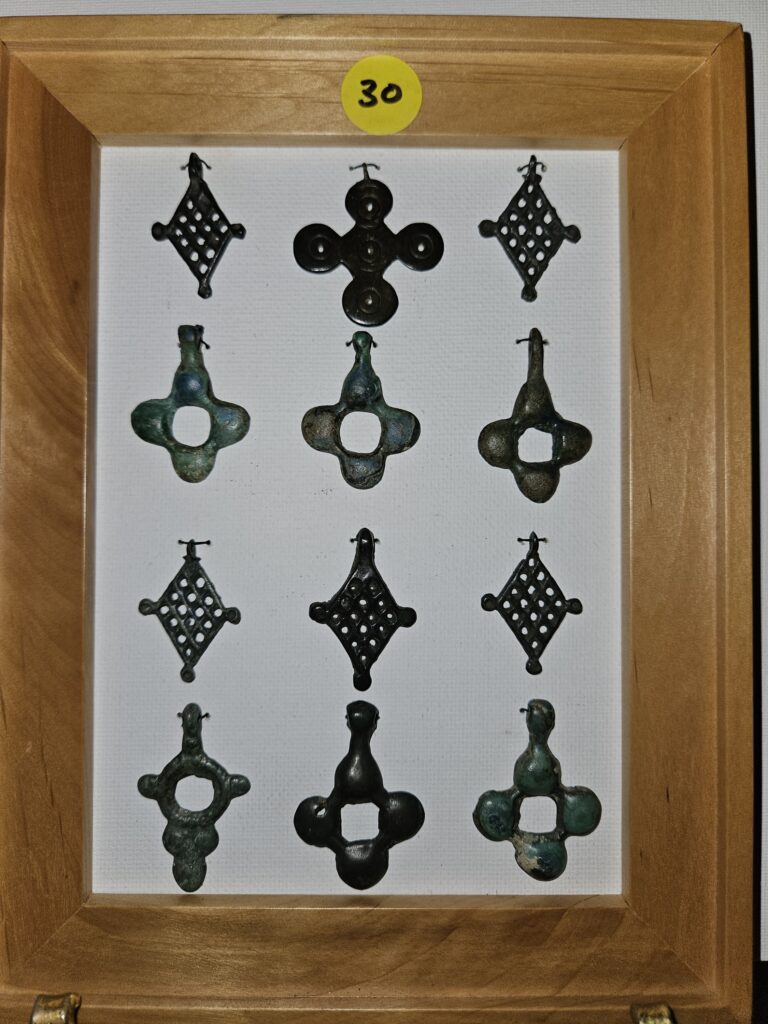
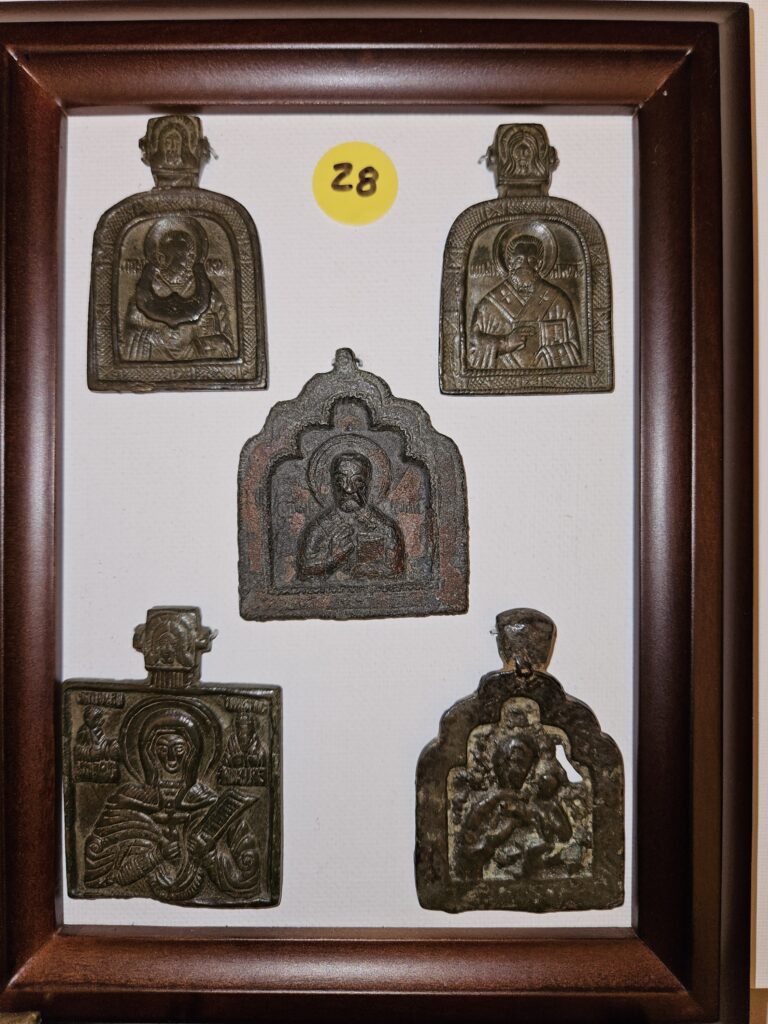
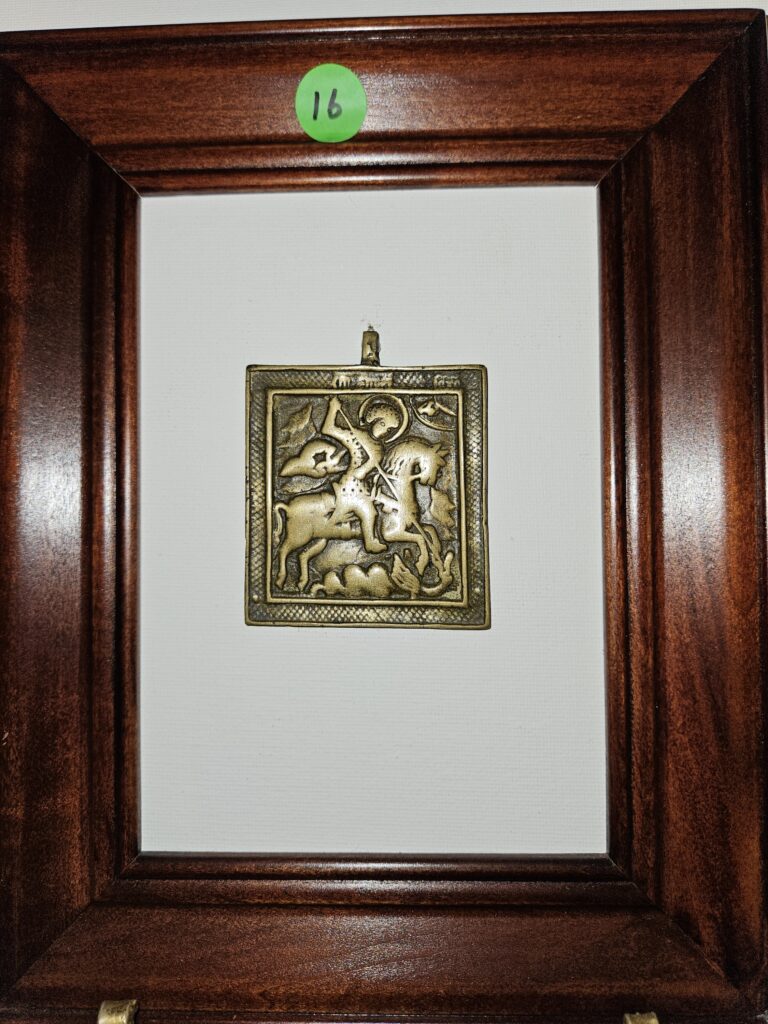
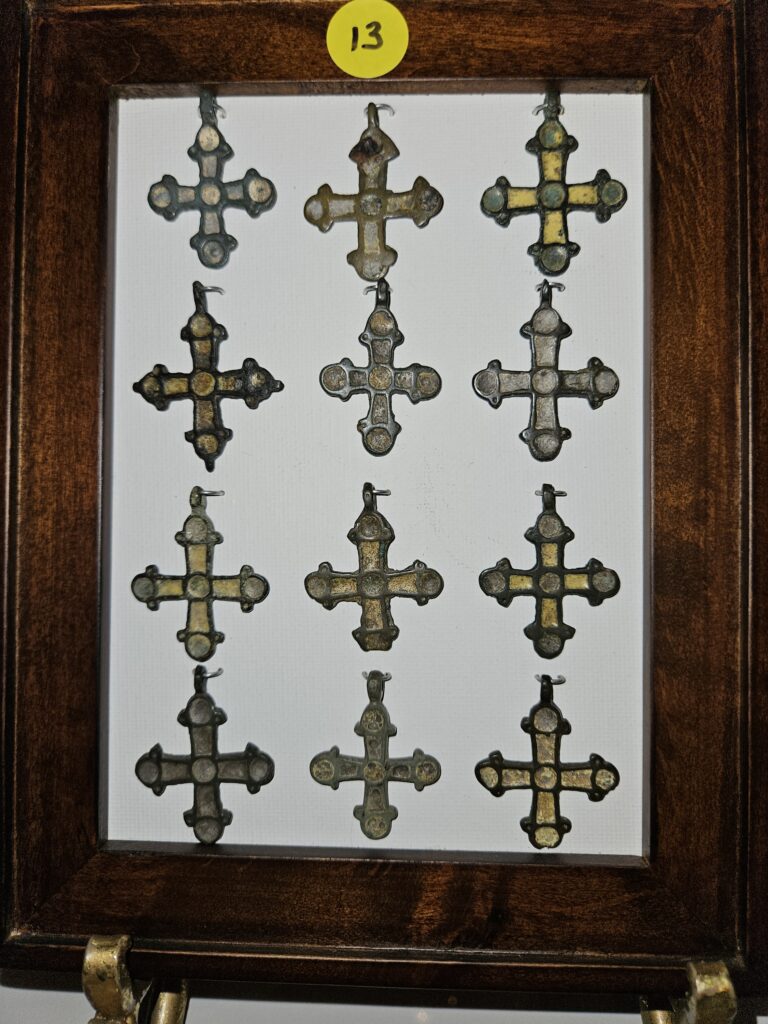
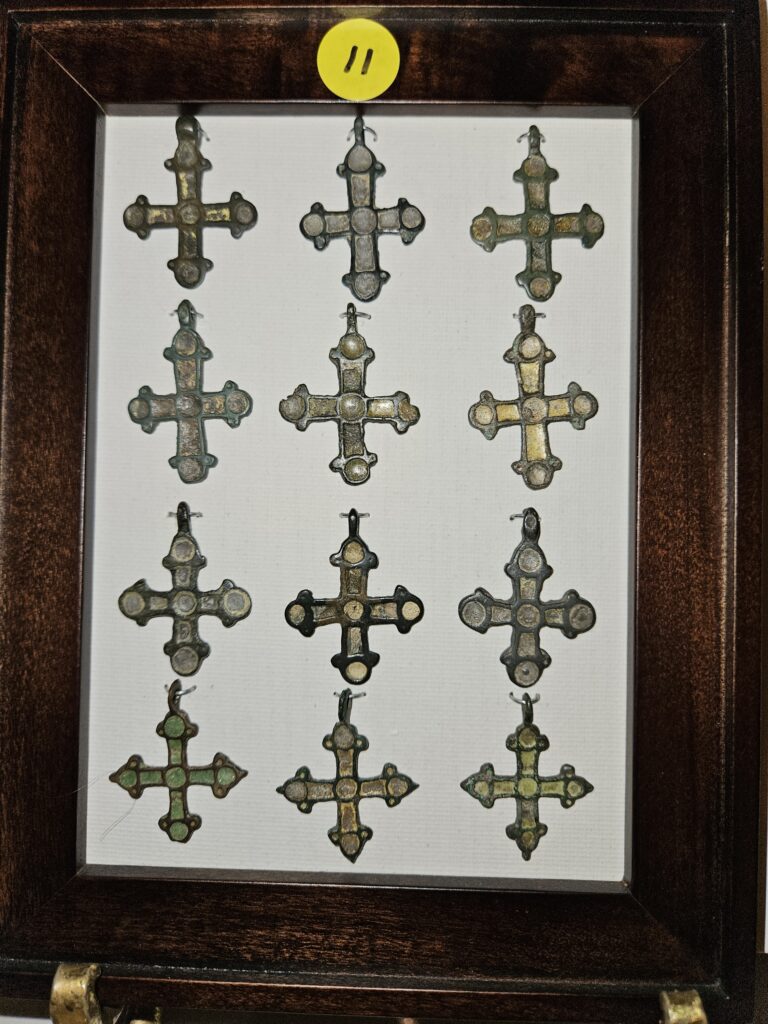
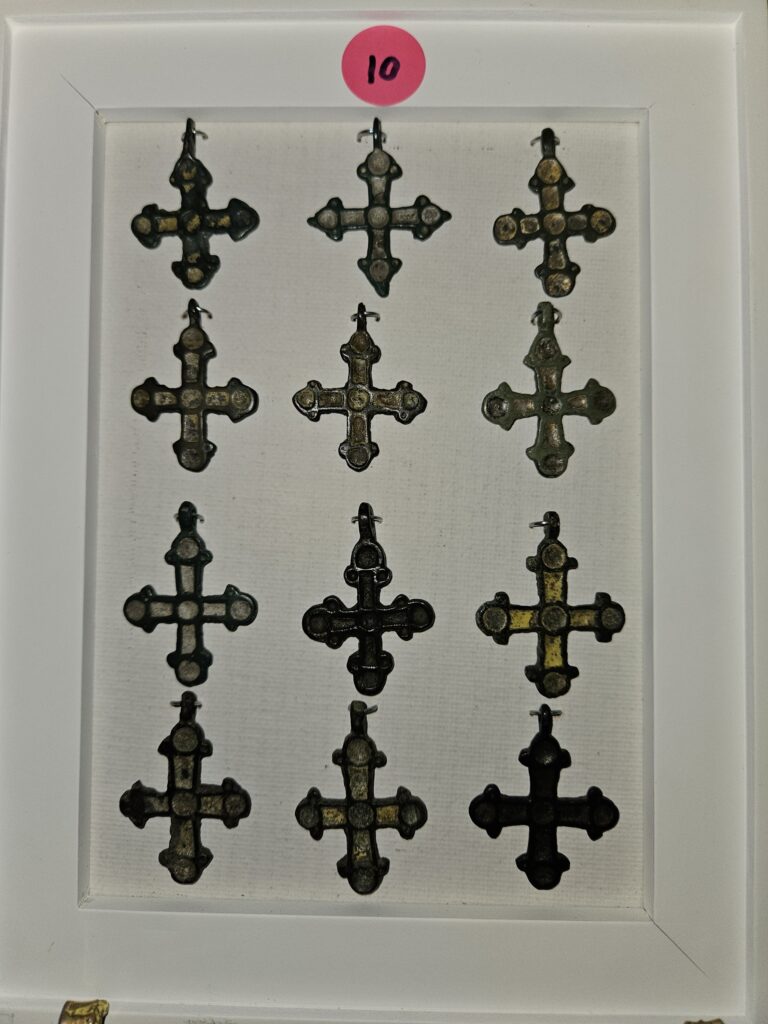
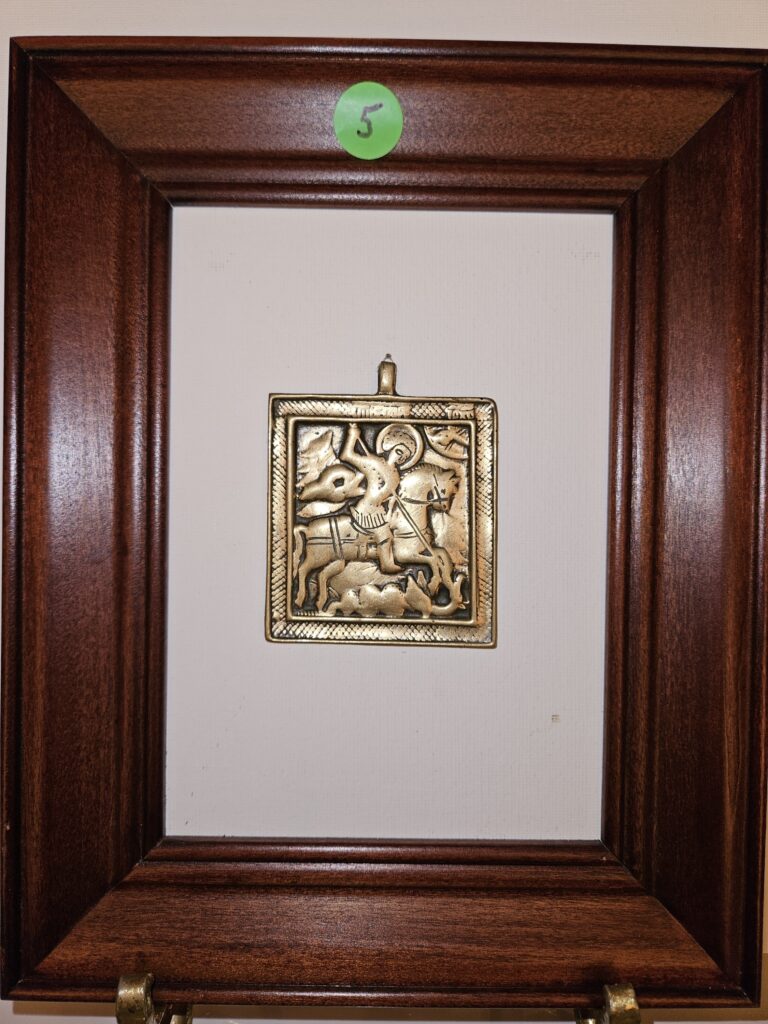
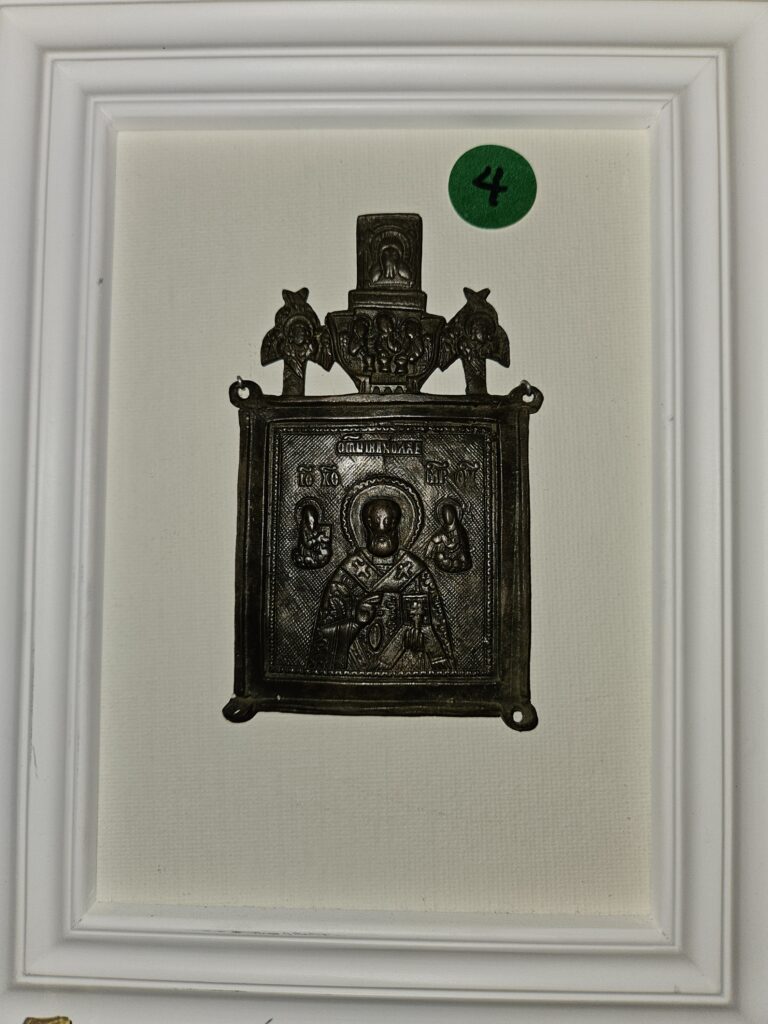
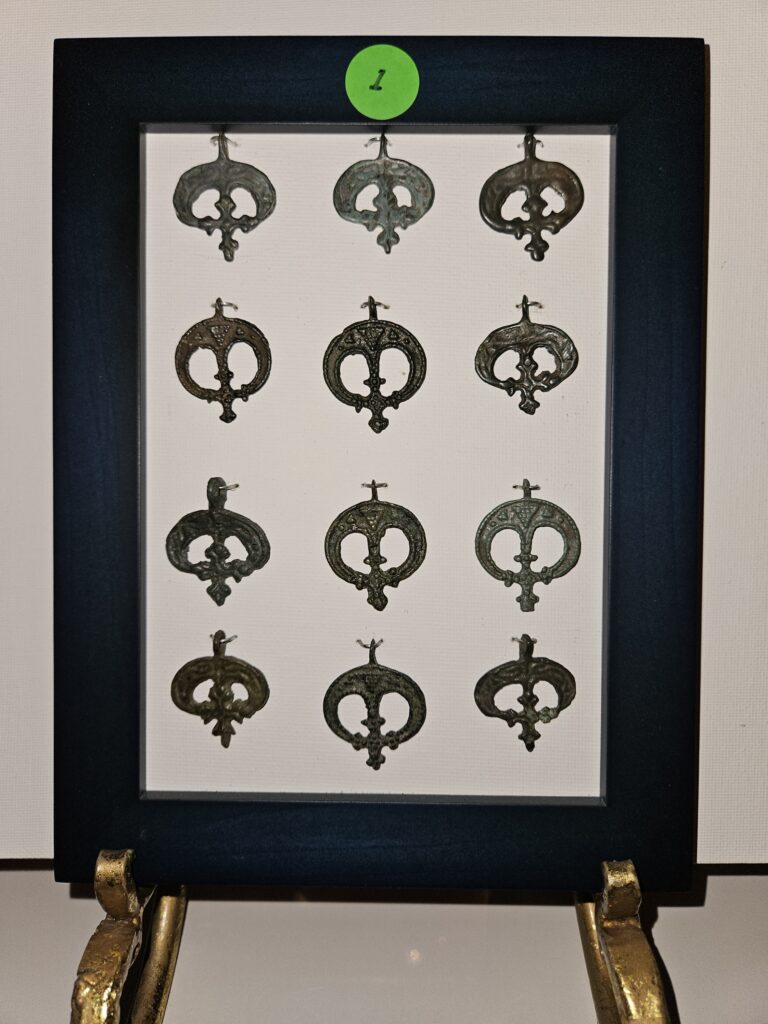
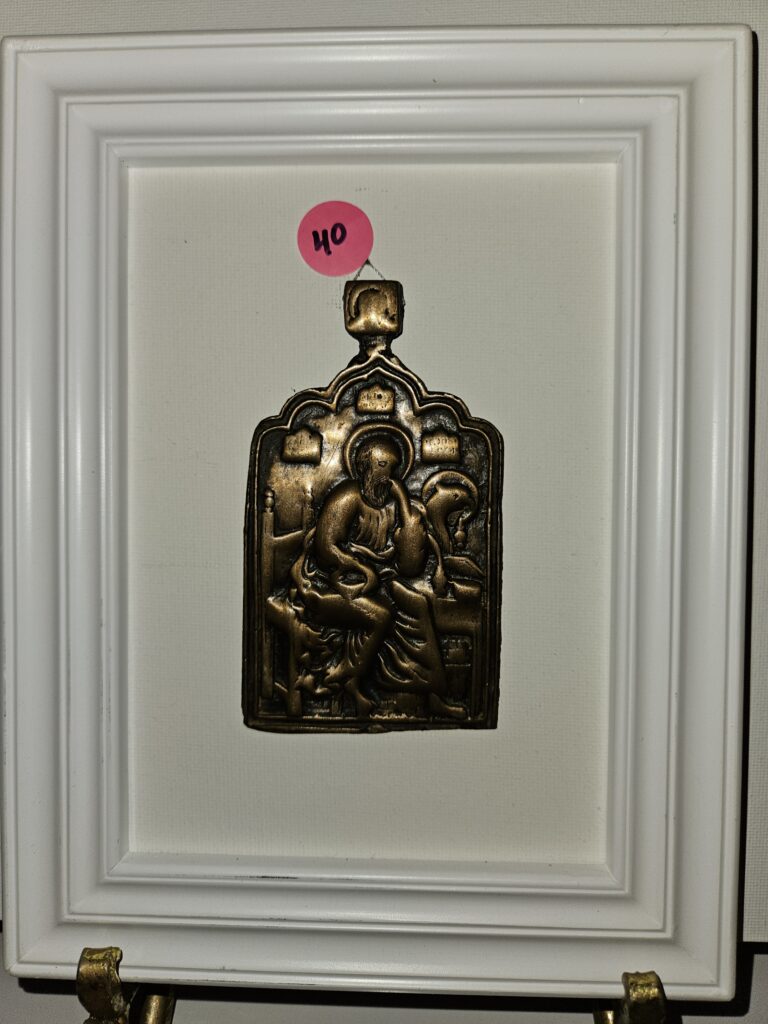
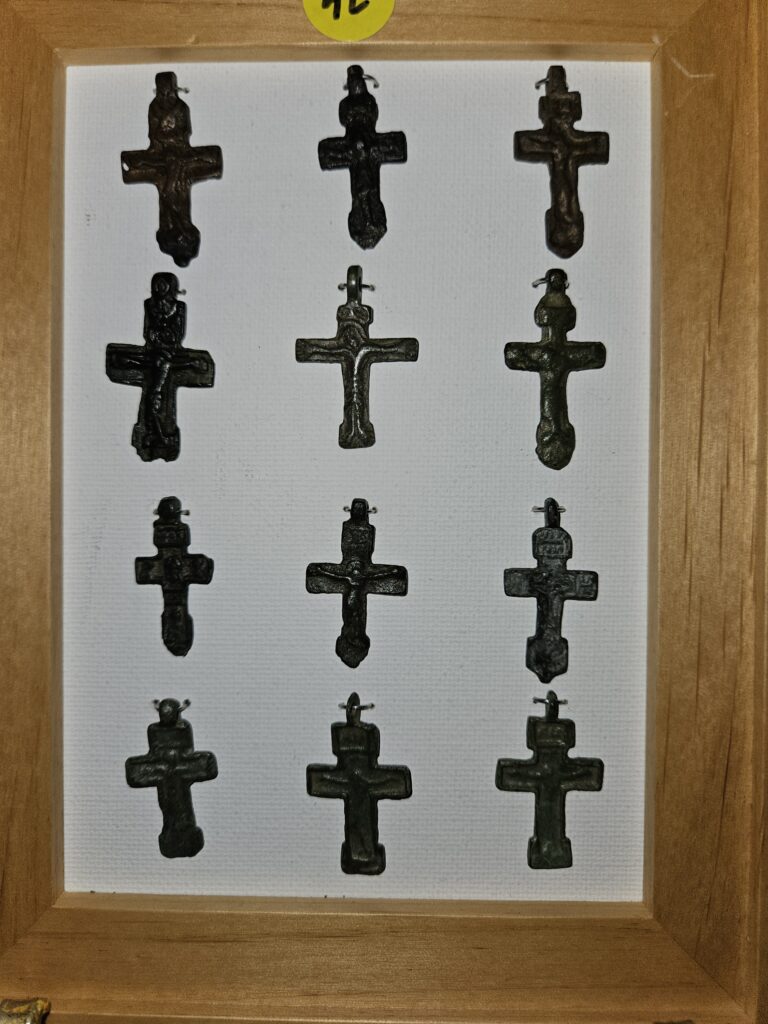
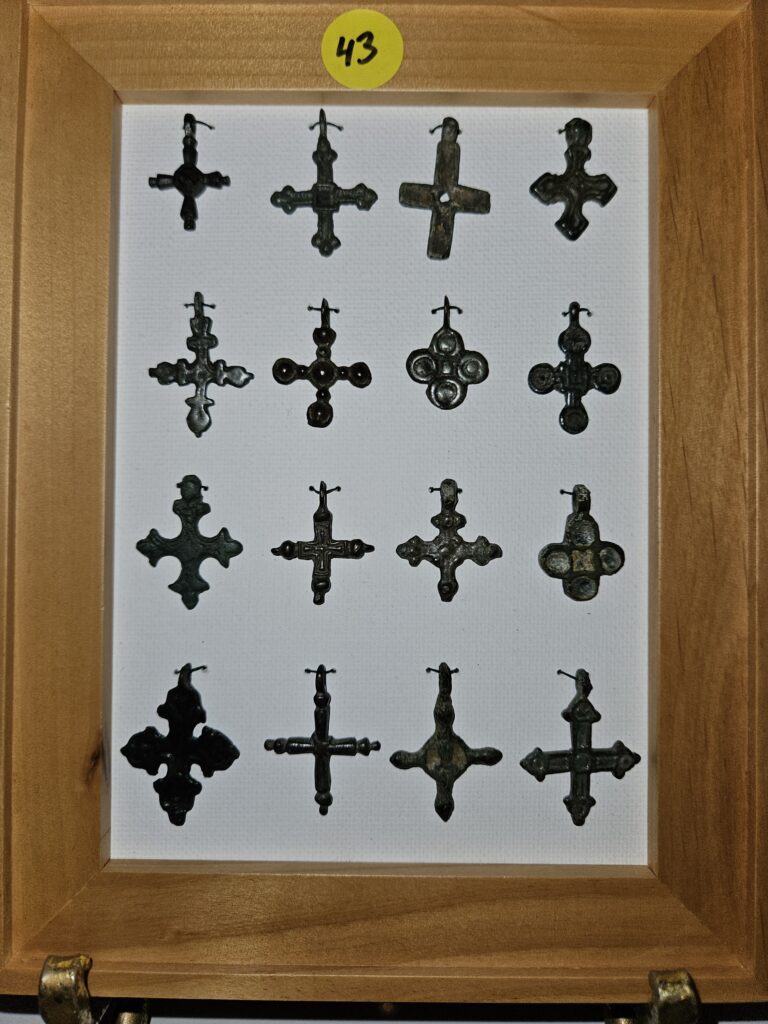
The underwear or “pectoral” crosses are small bronze castings that were produced in foundries at selected monasteries. They are characterized by small size, simplicity and unpretentious symbols and icons of basic Christianity. Since ancient times, at the moment of Baptism, the Holy Church gave the cross to be worn on the breast under the clothes for the person’s entire life and if lost, where replaced by another one.
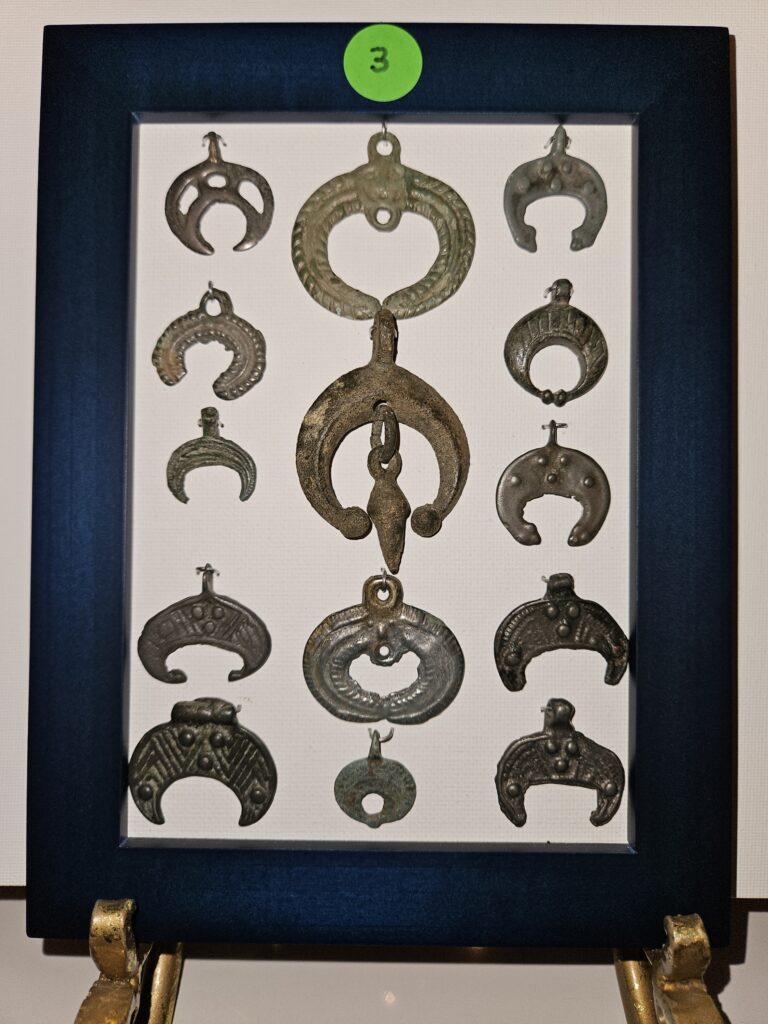
These crosses were found in old cart paths, around ancient villages and in the debris of old battle fields. Each of these crosses were carefully cleaned and preserved with respect to their previous owner.
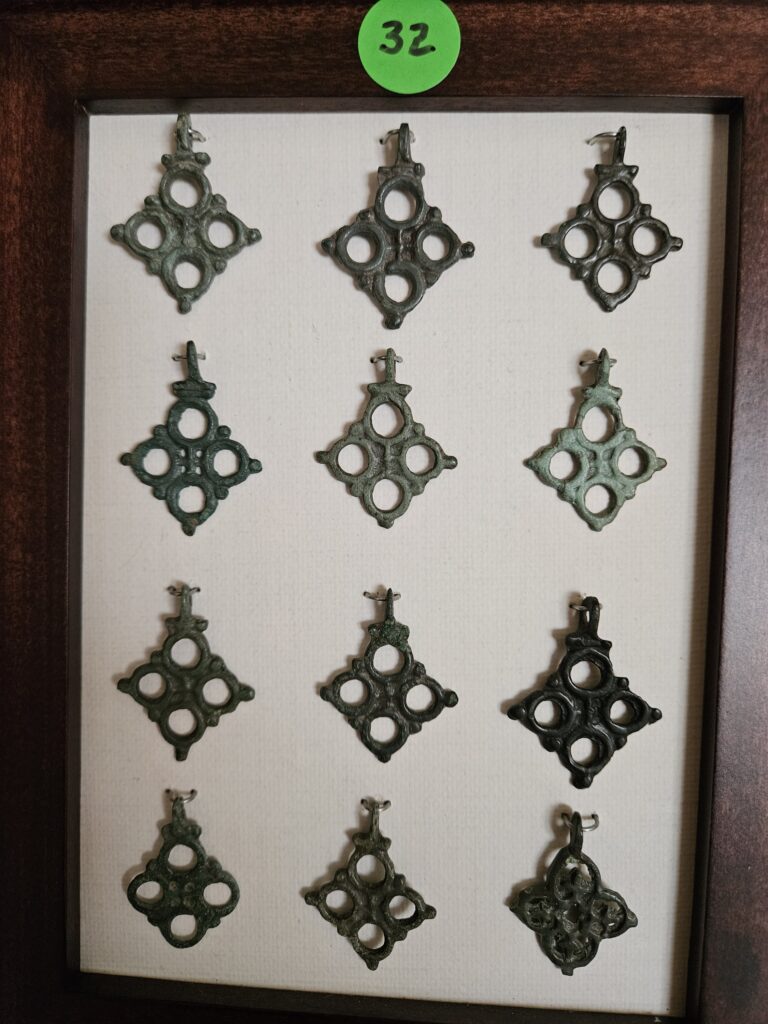
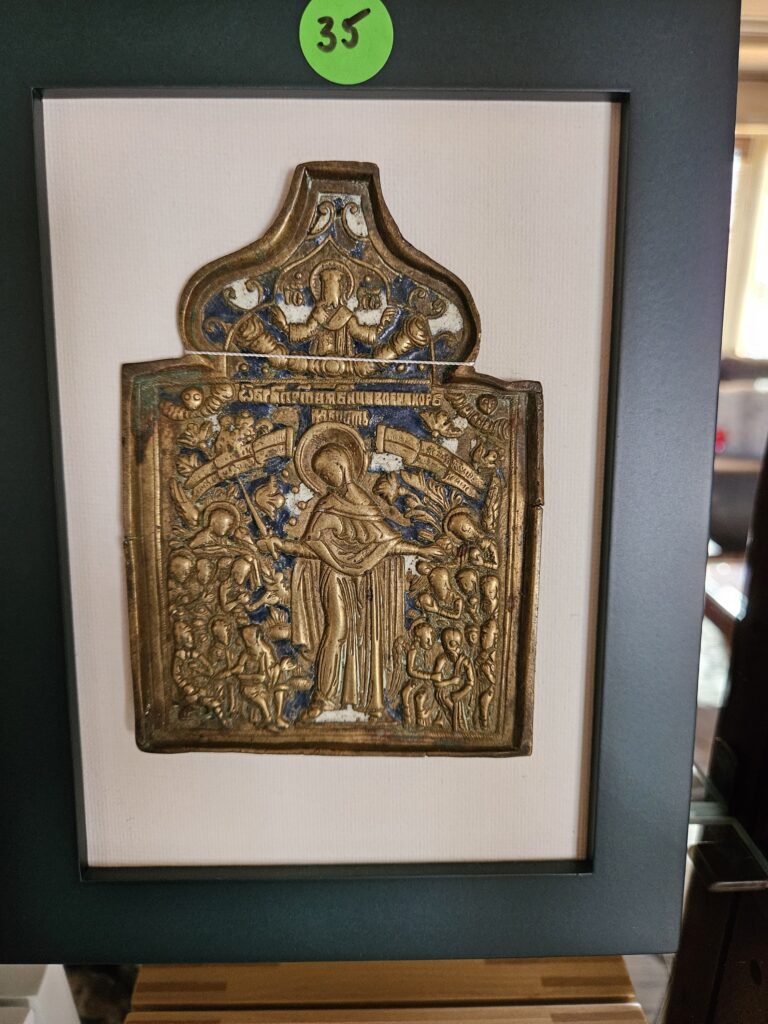
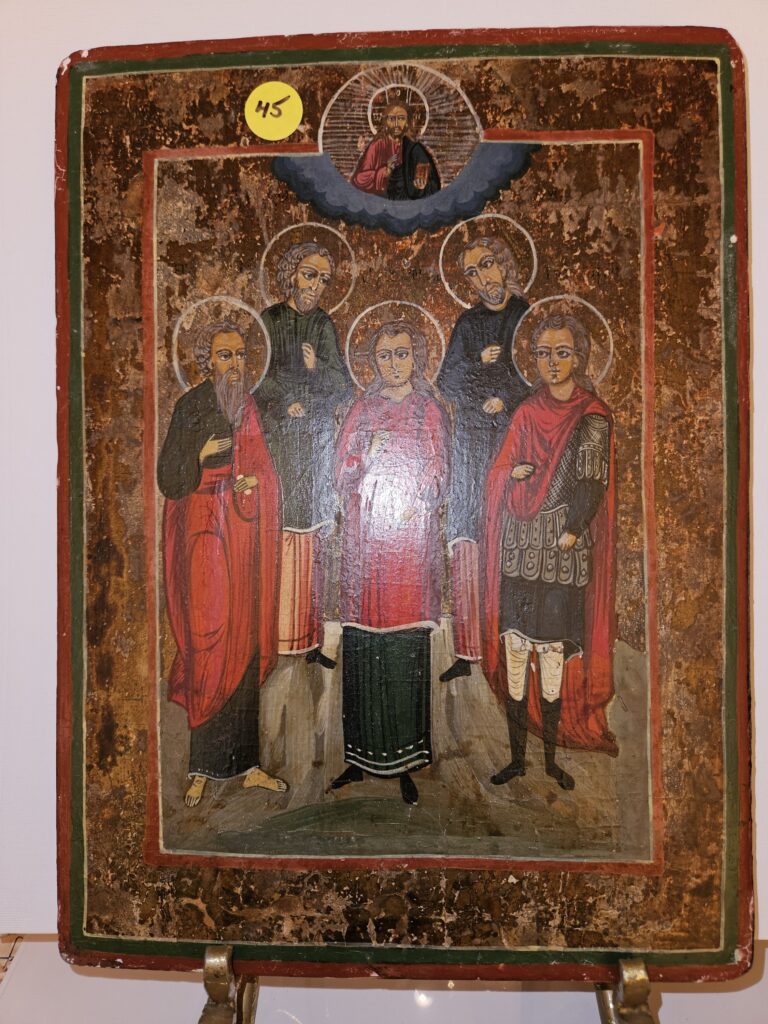
Embrace Spiritual Heritage
Journey through centuries of sacred craftsmanship where each bronze cross tells a story of unwavering faith and divine protection.